
Yard Debris Removal in Boise After a Big Windstorm Hits
Branches all over the yard after a Treasure Valley windstorm? Here's what to check first, what to cut, and how yard debris removal works around Boise.
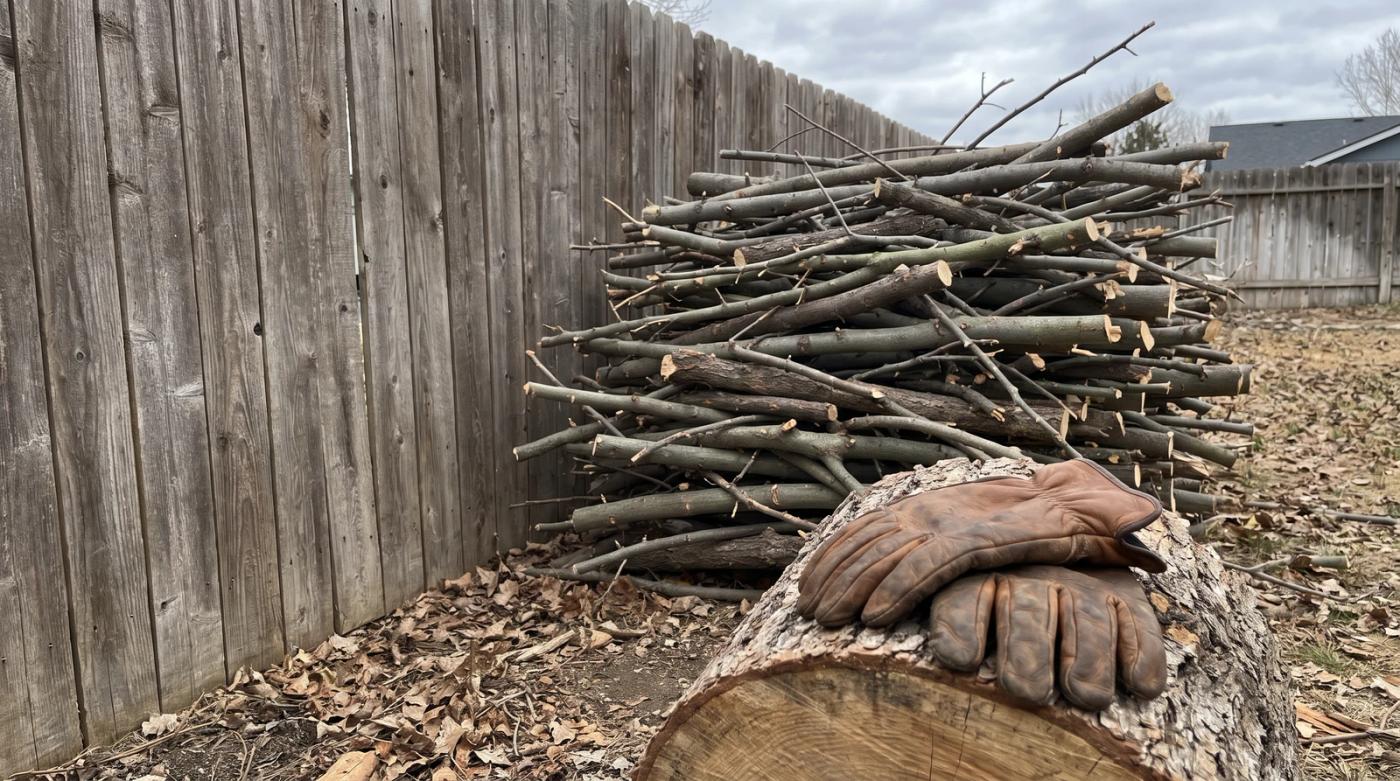
The wind finally quit sometime after midnight. Now it's morning, half your neighbor's silver maple is lying across your lawn, and you're already wondering how yard debris removal works when the whole street looks like this.
If you live in Boise or anywhere else in the Treasure Valley, you know these storms. They roll through in spring and again in fall, and they don't care how nice your yard looked yesterday. Here's what to do before anybody hauls anything, and the mistakes that make cleanup slower and pricier than it needs to be.
Before You Touch Anything, Look Up
The first job after a storm isn't cleanup. It's a slow walk around the property.
Look up before you look down. A limb that's cracked but still hanging in the canopy is called a hanger, and it can drop with no warning while you're raking underneath it. If you spot one, stay out from under it and get a tree service out.
Then check for wires. If a branch is touching or tangled in a power line, leave it alone and call Idaho Power. That includes the line running to your house.
Don't nudge it with a rake or a pole. That's not a junk removal job, and it's not a homeowner job either.
After that, take pictures. Fence damage, a dented gutter, a limb on the roof. If there's any chance you'll file an insurance claim, you want photos of everything right where it landed, before it gets cut up and stacked.
Whose Tree Is It, Anyway?
This question comes up a lot in places like Meridian, Star and Middleton, where the new subdivisions have small backyards and trees hanging over every fence line.
In a lot of cases, whatever lands in your yard is yours to clean up, even if the tree grew next door. It can get more complicated when the tree was obviously dead or rotting before the storm. That's a question for your insurance agent, not your junk hauler.
What matters for cleanup is talking to your neighbor before anybody starts cutting. If the trunk is on their side and the top is on yours, decide together who's handling what. That's a lot easier over the fence on a Saturday morning than after somebody's already hauled half of it off.
Getting Your Pile Ready for Yard Debris Removal
Once the yard is safe and you know what's yours, you can start prepping. A little work here changes how fast the job goes and what it costs.
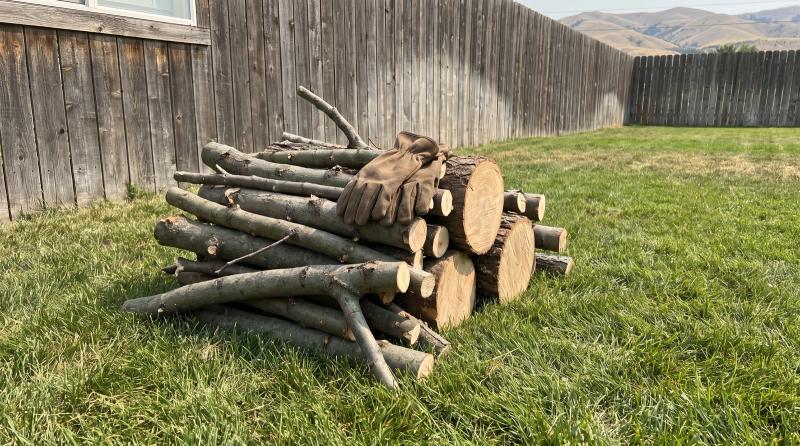
Cut limbs into pieces you can actually lift. A long branch with all its side shoots takes up a silly amount of trailer space because it won't pack down. Trim the side branches off, cut the main limb into shorter sections, and everything lies flat.
Stack it in one spot, all facing the same direction, as close to the driveway or side yard as you can manage. Scattered piles across the back lawn mean more trips and more time.
Keep storm debris separate from everything else. Branches, leaves and twigs are yard waste. A broken fence panel or a crushed patio umbrella isn't, and those often go somewhere different for disposal.
Heads up: Don't run a chainsaw through a limb that's bent under tension, like a branch pinned under a trunk or bowed against the ground. Once you cut, it can spring back hard. If the wood is loaded like that and you're not comfortable with a saw, leave it for a pro.
Yard Debris Removal Options Around Boise
So you've got a pile. Where does it go?
For a small amount, your curbside cart might handle it. Boise, Meridian and the other cities each have their own rules on what goes in the cart and how much can sit next to it, so check with your city or hauler. The catch after a storm is that the whole neighborhood is trying to stuff their carts the same week.
You can haul it yourself. Ada County Landfill takes yard waste, but check their current fees, hours and load rules before you head out.
Over in Nampa and Caldwell, Canyon County runs its own sites with its own rules. A DIY run works fine if you've got a truck, a free afternoon and a pile that fits in one load.
Or you can hire it out. With most haulers, the price comes down to volume and access. A neat stack by the driveway is quicker to load than branches scattered behind a locked gate at the far end of a sloped lot in the Eagle foothills, and heavy trunk sections can change things too.
One more thing about timing. Right after a big storm, tree services and haulers across the valley tend to get busy all at once.
If the debris isn't blocking anything or creating a hazard, there's no shame in stacking it and waiting a bit. Branches don't go bad.
Where Cleanup Usually Goes Sideways
The trouble spots are pretty predictable.
People cut before they photograph, and then the adjuster has nothing to look at. They pile branches against a fence that's already leaning, which finishes the job the wind started. They toss a broken lawn chair into the brush, and now the load isn't clean yard waste anymore.
Then there's dragging a big limb across the lawn in one piece. Can you do it? Sure.
Is it worth the torn-up grass and the sore back? Usually not. Cut it first.
Once the Wind Dies Down
Check for hangers and power lines first, then take photos. Talk to your neighbor if the tree was theirs.
After that, cut, stack and sort, and pick whichever option fits the size of your pile.
If the pile's bigger than you feel like dealing with, I'm happy to take a look. I'm Tommy, I run Man of Steel Junk Removal out of Eagle, and I do the hauling myself.
Text a photo of the mess to (208) 391-0221 and I'll send you a price. And if your curbside cart can handle it, I'll tell you that too.
Need help with yard debris removal?
Name and number is all it takes. Man of Steel Junk Removal will get back to you with a price.
Rather just ask?
Skip the reading. Man of Steel Junk Removal picks up the phone.
