
Yard Debris Removal in Boise When the Cart Won't Cut It
Your green cart handles a normal week, not a brush pile. Here's when yard debris removal in Boise beats hauling it yourself, and what it runs.
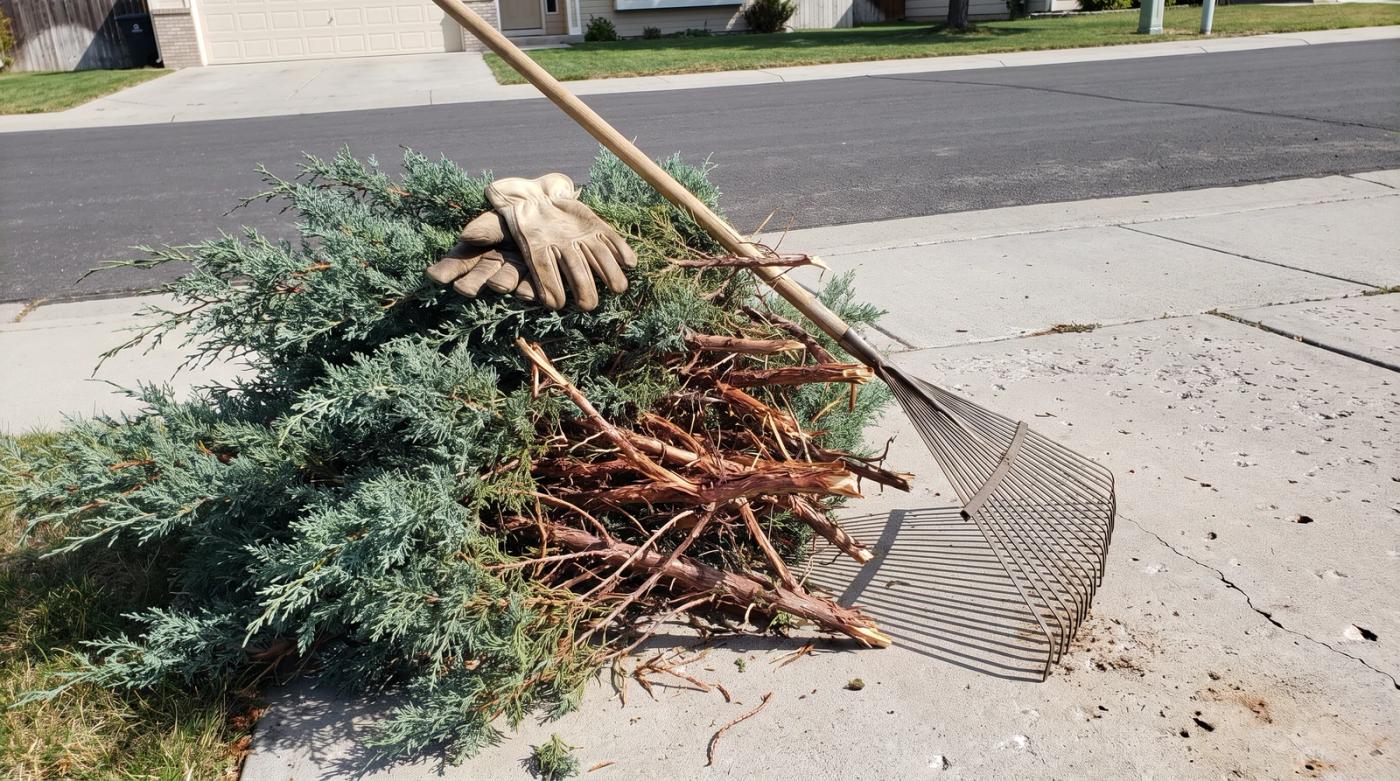
A guy out near Floating Feather cut back a long row of overgrown junipers on a Saturday and felt pretty good about himself. By Sunday night he was texting me about yard debris removal. The brush pile in his driveway stood taller than his fence panel, and his green cart was already half full of grass clippings.
He did the math on feeding it to the cart a little at a time. Six weeks, maybe eight. His wife did different math.
That's most of the calls I get around Boise and the rest of the Treasure Valley. Nothing dramatic. Just a pile that outgrew the cart.
Why the green cart chokes on a real brush pile
Your cart is sized for a normal week. Grass, leaves, light prunings, a few short branches. The lid has to close, limbs have to be cut down, and there's a weight limit whether it's printed on the lid or not.
The rules aren't the same across the valley, either. Boise runs its own program, Eagle and Meridian have their own setup, and Nampa and Caldwell do it their way over in Canyon County. Some programs go quiet in the dead of winter, so two minutes on your city's page beats guessing.
Here's the part that catches people off guard. Branches don't compact. They tangle, they spring back, and they hold air.
One overgrown shrub row makes more volume than a cart swallows in two months. A pile you'd swear fits in a wheelbarrow will eat a third of my trailer.
Grass and leaves are the opposite problem. They pack down to nothing and weigh a ton. Wet grass especially.
Tip: If a grass or leaf pile has to sit more than a few days in July, skip the tarp. It starts composting underneath and picks up water weight, and by the time anybody hauls it you're paying for water. Spread it thin in the sun, or get it gone while it's still light.
When yard debris removal beats doing it yourself
Not always. I'll say that straight out, even though I'd rather have the job.
Own a truck, small clean pile, free Saturday morning? A run to the Ada County landfill out on Seamans Gulch is hard to beat on price. You'll pay a minimum fee at the scale and burn some gas, and that's about it.
Where it flips is the second trip. Almost nobody gets it in one.
You load brush by hand, drive out there, then climb into the bed and pull every piece back out, because branches hook on each other and won't slide. Then you spend twenty minutes sweeping juniper needles out of the bed.
So the honest test is this. Can you finish it in one load, and is your morning worth less than the difference? If the answer's no either way, yard debris removal quits being the lazy choice and starts being the cheap one.
I show up with the F-350 and a dump trailer. The trailer dumps, so nothing gets unloaded by hand, and clean green waste goes to compost instead of getting buried. If there's an old shed panel or a rusted patio set leaning against the pile, metal gets recycled and anything still usable goes to Idaho Youth Ranch or St. Vincent de Paul.
Burning it isn't the shortcut people think
Every spring somebody tells me they'll just burn the pile.
Maybe. Open burning here depends on where you live, what season it is, and whether the air quality folks have shut it down that week.
Inside city limits it's usually a hard no. Out in the county it can be allowed in certain windows with a permit from your fire district.
Check before you strike a match, not after.
Even where it's legal, freshly cut green wood doesn't really burn. It smolders for two days and smokes out your neighbors. Juniper and arborvitae go up faster than anybody expects, and we get dry summers with real wind coming off the foothills.
I've cleaned up after a couple of guys who learned that part the hard way.
What yard debris removal costs once sod and rock get in the pile
This is the part that moves the number.
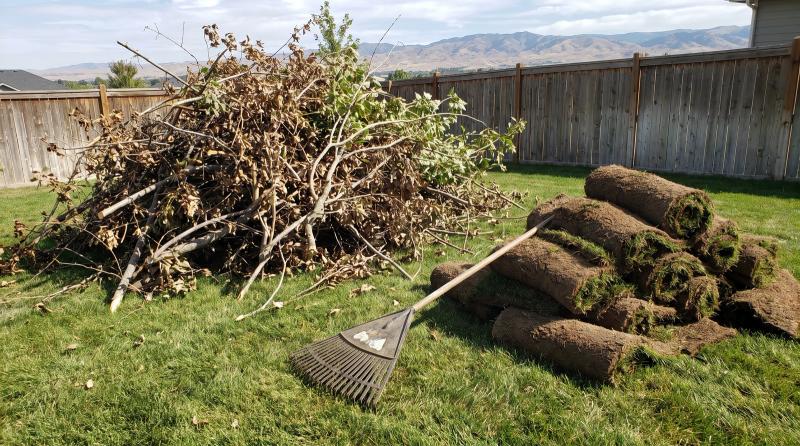
Brush and leaves are bulky but light, so you're paying for space in the trailer. Sod, dirt, gravel and old landscape rock are the reverse. A strip of sod off a small front yard on the Bench, or the river rock somebody's pulling out of a side yard in one of Star's newer subdivisions, hits weight limits long before the trailer looks full.
When that happens it isn't one load anymore. It's two smaller ones, and the price reflects that. Same story with concrete edging or a busted-up sidewalk mixed into the branches.
So tell me up front if there's dirt or rock in it. A brush pile and a sod pile the same size aren't remotely the same job, and I'd rather quote you a real number than a cheap one I have to walk back standing in your driveway.
For most residential piles you're somewhere between one loaded pickup and a full trailer, and I'd much rather price it off a photo than a description. Photos don't exaggerate. People do, in both directions.
The bottom line
If the pile will clear out through your cart in two or three weeks, use the cart. It's already paid for. Once you're rationing branches for a month and a half, or there's sod and rock in the mix, hauling it is the better trade.
Snap a picture and text it to (208) 391-0221. I'll send you a price, and if it's not worth paying for, I'll tell you that too. Most stuff's gone within a couple of days.
Need help with yard debris removal?
Name and number is all it takes. Man of Steel Junk Removal will get back to you with a price.
Rather just ask?
Skip the reading. Man of Steel Junk Removal picks up the phone.