
Fence Demolition in Boise: Tear It Out Yourself or Hire It?
Thinking about tearing out an old fence in Boise yourself? Here's what fence demolition really involves, from concrete post footings to the haul-off.
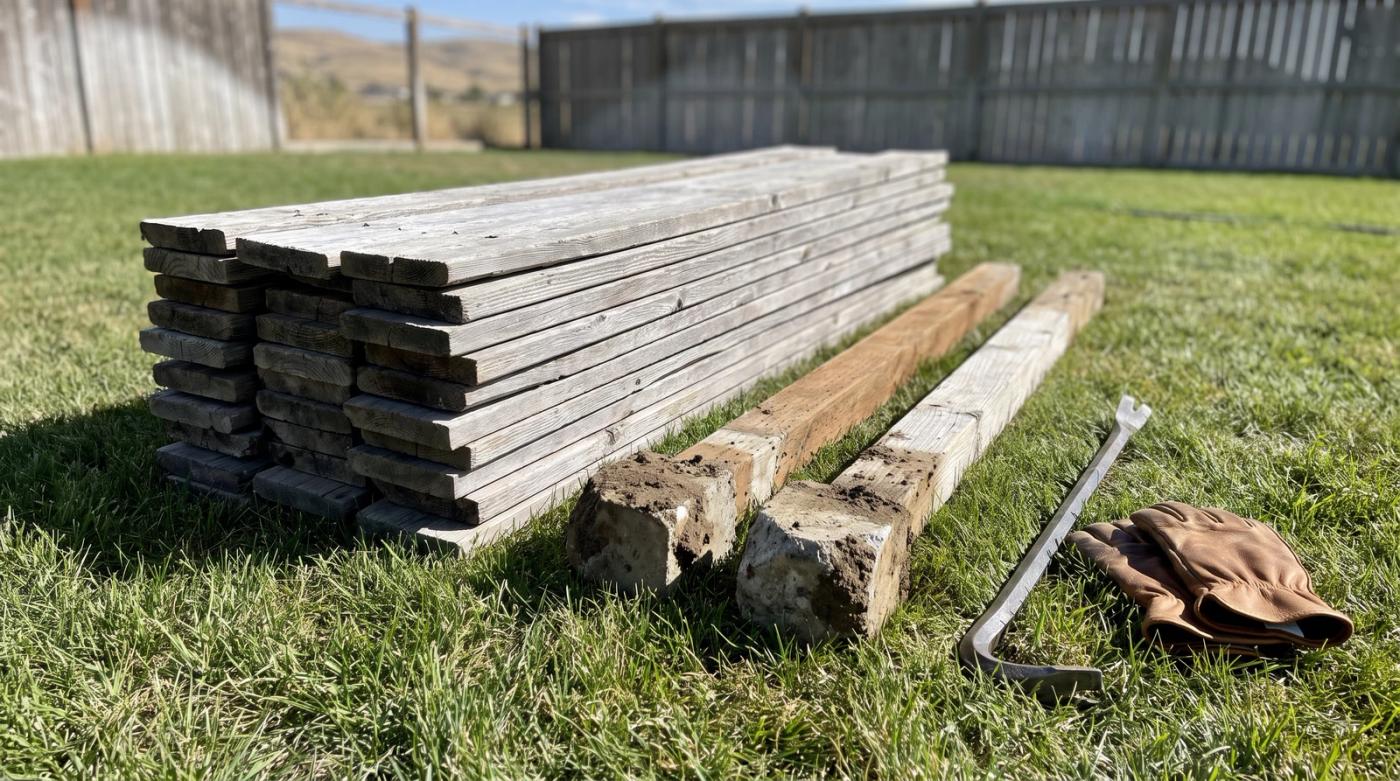
There's a moment every homeowner hits with an old wood fence. You lean on it to chat with the neighbor, it leans back, and you both pretend that didn't happen. That's usually when the fence demolition question shows up.
Can you rip it out yourself on a Saturday, or is it worth paying somebody? I do light demolition all over the Treasure Valley, so yes, I'd happily take the job.
But honestly, plenty of fences are a fair DIY project. Some aren't. Here's how to tell which one you've got.
The boards are the easy part
Most people picture fence removal as knocking off pickets with a hammer. That part goes fast. Give it an afternoon, maybe less, with a pry bar and a cordless drill for the screws.
Then you get to the posts.
In a lot of Boise-area neighborhoods, especially the newer builds in Meridian, Star and Middleton, every post was set in a big plug of concrete. Pull one and you're not lifting a 4x4. You're lifting a 4x4 with a chunk of concrete the size of a five-gallon bucket hanging off the bottom.
Now multiply that by every post along the property line.
Older fences on the Bench or in the North End are a coin flip. Some posts sat in tamped dirt and rotted off right at ground level. Others were set by somebody who really, really didn't want them going anywhere.
Is DIY fence demolition worth it?
A short run with posts in plain dirt? Go for it. You'll save some money and probably enjoy it a little.
The concrete is where it gets rough. With a footed post, you can dig around it and wrestle the whole thing out, or rent a post puller. A farm jack and a chain works too, if you've got one.
The last option is cutting the post off at grade and leaving the concrete in the ground. That's fine if you're putting in lawn. It's a real problem if your new posts need to go in the same holes.
The soil matters too. Treasure Valley ground in late August can bounce a shovel right back at you.
Spring is softer, which helps, though it's also muddy and heavy. Winter's mostly out. Frozen ground doesn't give up a post without a fight.
And here's the part people forget. Once it's all out, where does it go?
Getting rid of the old fence
A 100-foot fence makes a surprisingly big pile. Boards, rails, posts, concrete chunks and a few hundred rusty screws. That's not fitting in your garbage cart.
You can haul it to the Ada County landfill or Hidden Hollow yourself if you've got a truck and a free morning. Just know that concrete is heavy enough to make a pickup bed sag, and a couple of trips adds up in fuel and fees. Folks out in Nampa and Caldwell deal with the Canyon County landfill instead, same idea.
Old fence wood isn't something Idaho Youth Ranch or St. Vincent de Paul is going to take. It's weathered, it's full of nails, and a lot of it is pressure-treated.
Which, by the way, you shouldn't burn in the backyard fire pit. The chemicals in treated lumber don't belong in your lungs, or your neighbor's.
Chain-link and metal fencing is a different story. That goes to the scrap recycler, which is where mine ends up.
Heads up: If you plan to dig out post footings, call 811 a few days before you start. It's free, they'll mark the buried lines, and fence lines are exactly where gas, cable and irrigation like to run.
Talk to the neighbor first
This one isn't about tools. If the fence sits on or near a shared property line, have a quick chat before it comes down.
They may have split the cost of the original fence. They may own a dog that's about to discover a whole new yard. Or they might want to go in on a new one with you.
Five minutes over the fence, while it's still standing, saves a lot of awkwardness later.
If you're in an HOA, check their rules on how long a yard can sit unfenced and what the replacement has to look like. Some of the newer subdivisions around Eagle and Meridian care about that more than you'd expect.
When paying for fence demolition makes sense
So when should you just call someone?
Lots of posts in concrete is the big one. A fence running up a slope in the Eagle foothills, where the dirt fights back, is another. And if you don't own a truck, or you'd rather not spend two Saturdays and a chiropractor visit on it, that counts too.
It also makes sense when the fence is part of something bigger. Clearing out a backyard, tearing down an old shed, getting a house ready to sell? It's easier to have the whole lot hauled in one trip.
Cost depends on the length, the material, whether the posts are footed and how easy it is to get to. A straight run beside a driveway goes a lot quicker than one tucked behind a garden and a swing set.
That's why I ask for a photo first. It tells me most of what I need to know.
The bottom line
If it's a short fence with posts in plain dirt, DIY is a fair weekend project. Pull the boards, rock the posts loose, and figure out your haul plan before you start.
If it's a long run with concrete footings, or you just don't want the pile sitting in your yard for a month, that's what I'm here for. Text a photo of the fence to (208) 391-0221 and I'll send you a price.
No pressure either way. If it looks like an easy one you can handle yourself, I'll tell you that too.
Need help with demolition?
Name and number is all it takes. Man of Steel Junk Removal will get back to you with a price.
Rather just ask?
Skip the reading. Man of Steel Junk Removal picks up the phone.
