
Deck Demolition in Boise: What Really Drives the Cost
What deck demolition really costs in Boise depends on height, footings and access more than square footage. Here's what drives the price, and how to prep.
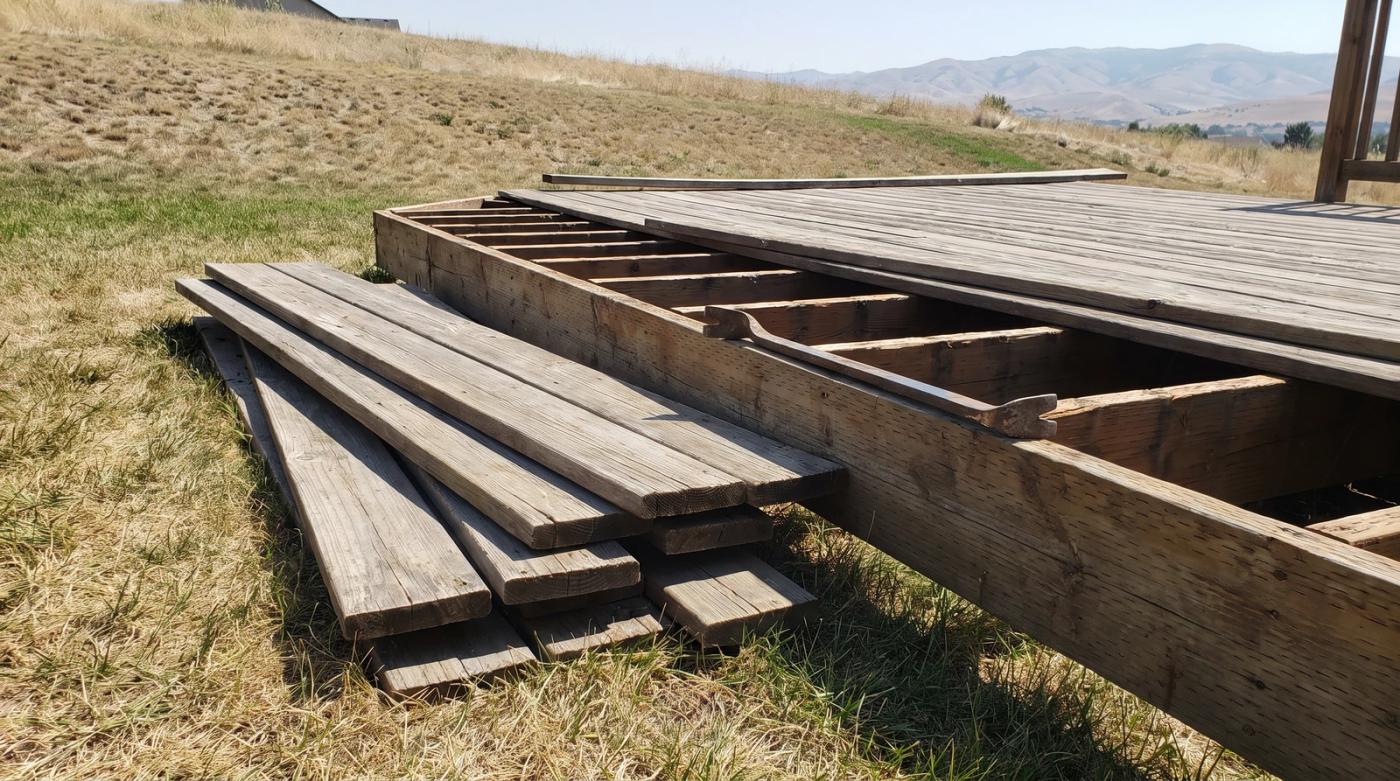
A lot of deck questions start the same way: a photo of a back deck and a question about what deck demolition would run. A couple of boards gone spongy, a stair tread cracked clean through, a grill nobody trusts on it anymore.
Fair question. The annoying answer is that it depends, and not on the thing most people assume.
Square footage matters less than you'd think. What moves the number around Boise and the rest of the Treasure Valley is how high the deck sits, what's holding it up, and whether I can get the debris to the trailer without walking every board through a side gate.
What drives deck demolition cost around here
Height is the big one. A ground-level deck sitting a foot off the dirt on blocks comes apart fast.
An elevated deck hanging off a second-story slider in one of those newer Star or Middleton subdivisions is a different animal. Everything comes down controlled, and you're working over a drop instead of over grass.
Attachment matters too. If the deck is bolted to the house with a ledger board, that has to come off clean without wrecking siding or leaving a rotten hole in your wall.
Then there's material. Pressure-treated pine is common and manageable. Old cedar or redwood, like a lot of decks on the Boise Bench and in the North End, is light and usually half rotted already. Composite is the heavy stuff, and nobody around here recycles it, so all of it goes to weight at the Ada County landfill.
That's the part people miss. Disposal is charged by weight, not by how big the pile looks in your backyard. A small deck built out of heavy material can cost more to haul off than a bigger one built light.
Access rounds it out. A 36-inch gate, a steep lot up in the Eagle foothills, a fence I have to pull a panel out of. None of it kills a job, it just adds time, and time is most of what you're paying for.
So what's the range? A small ground-level tear-out is one of the cheaper jobs I run, and a tall deck with concrete footings can cost a good deal more. I'd rather walk you through why than pretend there's one flat price.
The footings are the part everybody forgets
Ask yourself how far down you want this to go. That answer swings the price more than anything else on the list.
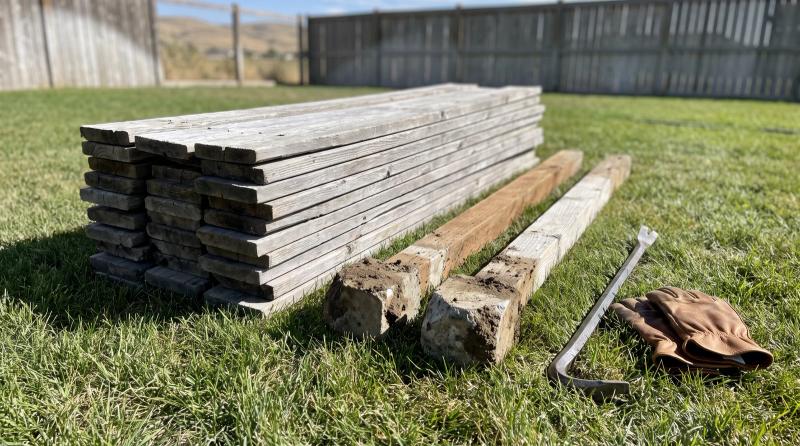
Posts set straight into the dirt, normal on older Nampa and Caldwell builds, usually rot off at the ground line and pull out with a good tug. Posts set in concrete are a project. Each one is a chunk the size of a five-gallon bucket, sometimes bigger, and it has to be dug out and hauled.
Pouring a patio or building new over the same footprint? Get the concrete out now. If you're going back to grass, cutting the posts below grade and pulling the top few inches is usually the smarter move, and nobody will ever know.
Timing plays in here too. January and February are rough on footings, since frozen ground doesn't dig so much as argue, and a July afternoon in the valley is no place to swing a sledge.
Spring is the busy season, because every homeowner around here looks at the deck in March and decides. Fall is the sweet spot: soft ground, no heat, and no fight for a concrete crew if you're rebuilding.
Tip: Before anyone starts pulling posts, run your sprinklers and flag the heads and lines around the deck. A lot of the buried surprises on a tear-out are irrigation, not concrete, and a cut lateral turns a clean job into a wet afternoon.
How to prep for a deck demolition
Clear everything off the deck and out from under it. Planters, patio furniture, bikes, the stack of scrap lumber somebody slid under there in 2019. If my first hour goes to moving your stuff, that hour lands on the invoice.
Unhook anything wired in. String lights, a fan somebody mounted to the pergola, an outlet on a post. Kill the breaker and tell me it's dead.
Pull what you want to keep before demo day, not during. Once a railing meets a sledge it isn't a railing anymore.
Furniture and planters in decent shape can go to Idaho Youth Ranch or St. Vincent de Paul, and I'll drop them off for you if you'd rather skip the trip.
Metal stays out of the landfill pile. Railings, joist hangers, brackets, the old gas line off a grill hookup. That gets separated and recycled, which helps the tonnage and helps your price.
How long does the whole thing take? That comes down to size, height and footings. A small ground-level deck goes quickly, and concrete footings are what stretch it out.
Should you just tear it out yourself?
Yes, I'd love the work, but a small ground-level deck with a reciprocating saw and a free Saturday is a real DIY job. Boards first, then framing, then posts. It goes faster than it looks.
The wall people hit is disposal. Even a modest deck makes more debris than most people expect, and by the third run out to Hidden Hollow, paying weight fees and picking nails out of your tires, the math stops being fun.
Got a trailer and a weekend? Go for it. If you don't, that's the part worth handing off.
The bottom line
Height, footings, material and access set the price on deck demolition. Square footage is nearly an afterthought.
Clear the deck, flag your sprinklers, and decide up front how deep you want those posts gone. You'll get a straighter number and a faster job.
Text me a photo at (208) 391-0221, ideally one from the side so I can see how high it sits. I'll give you a real price, and if it's something you'd rather knock out yourself, I'll tell you that.
Need help with demolition?
Name and number is all it takes. Man of Steel Junk Removal will get back to you with a price.
Rather just ask?
Skip the reading. Man of Steel Junk Removal picks up the phone.
