
Appliance Removal in Boise: Unhooking the Washer and Dryer
Unhooking an old washer and dryer before appliance removal in Boise: water valves, drain hoses, gas lines, 240-volt cords, the vent, and what to watch for.
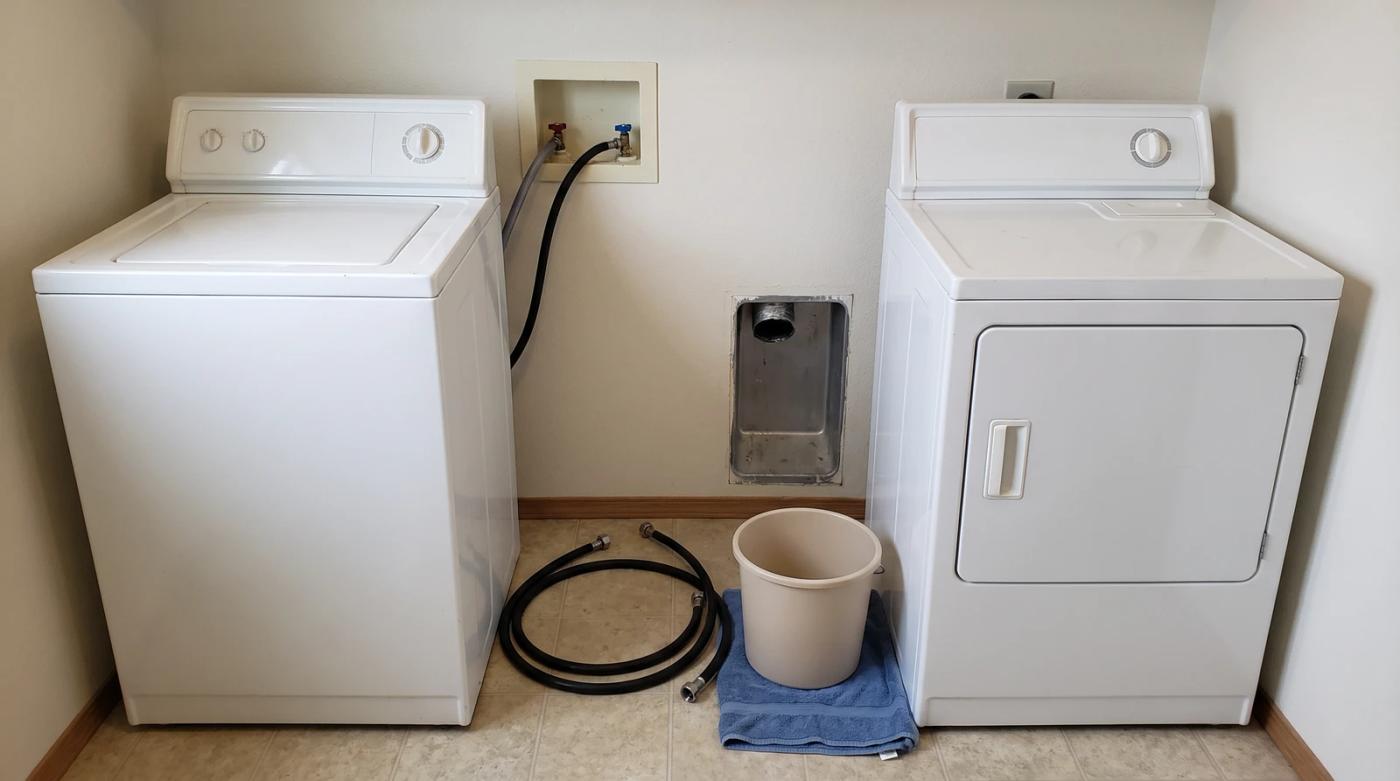
The new washer and dryer show up Saturday, and the old pair is still in the laundry room. They're plugged in, hooked up and holding whatever water the last load left behind. Before anything goes out the door for appliance removal, somebody has to unhook it.
That part's usually easier than people expect. It's also where the mess and the few real risks are, so it helps to know what you're looking at before you start pulling on hoses.
Shut off the washer's water first
Behind most washers you'll find two supply valves, one hot and one cold. Turn both off before you touch anything else.
In older houses on the Boise Bench or in the North End, those valves may not have moved in years. Go slow. If one won't turn or starts weeping at the stem, stop and shut the water off at the main instead of forcing it.
Once they're off, unscrew the supply hoses from the back of the machine. Have a bucket and an old towel right there, because those hoses are still full.
Then there's the drain hose. It's usually hooked into a standpipe in the wall or clipped over a laundry sink. Pull it out and drop the end straight into the bucket.
Tip: Run a drain-and-spin cycle with the washer empty the day before you unhook it. It pushes most of the leftover water out of the drum and the pump, so nobody's carrying a sloshing machine through your house.
A front-loader can still hold some water in the pump filter, usually behind a little panel at the bottom front. Open it over a shallow pan with a towel underneath. It's not much water, but it'll find the hallway carpet if you skip it.
Electric or gas dryer? That changes things
An electric dryer is easy. It runs on a heavy 240-volt cord with a big plug, and you just pull it from the outlet. Grab the plug, not the cord.
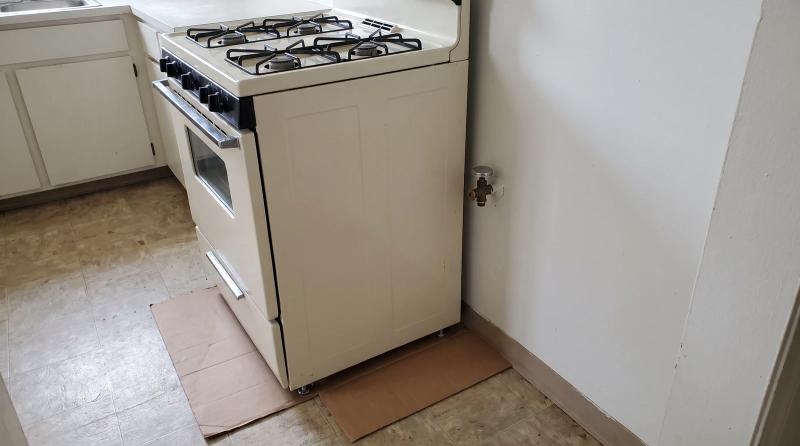
A gas dryer is a different job. There's a shutoff valve on the line behind it, and it needs to be fully closed before the flexible connector comes off. Once the dryer's gone, that line can't just be left open.
If you aren't comfortable capping a gas line, don't. Have a plumber do it. And if you smell gas at any point, get everyone outside first, then call Intermountain Gas, which serves most of the Treasure Valley.
Honestly, this is the one step I'd tell anybody to take seriously. A washer leak ruins a floor. A gas leak is a whole other thing.
If the new dryer is going in the same day, the installer will usually hook it to the same line. If it isn't, the line needs a proper cap.
Don't skip the vent
Pull the dryer out from the wall and you'll see the foil or metal duct running to the outside vent. Loosen the clamp and slide it off.
Take a look inside while you're there. Lint builds up in that duct over the years, and lint burns. If the new dryer will use the same run, now's the easiest time you'll ever get to clean it, with everything already pulled apart.
What about a stacked pair? Plenty of newer homes in Meridian, Star and Middleton have one tucked into a hallway closet or upstairs. They come apart. There's usually a bracket holding the dryer on top, and it takes two people to lift it off safely. Don't try to wrestle the whole stack out in one piece.
Prepping the path for appliance removal
Once everything's disconnected, the rest is about clearing a way out.
You see a lot of upstairs laundry rooms in the newer subdivisions around the valley, from Meridian out to Nampa. If yours is one of them, clear the stairs and hallway and pick up any rugs that'll slide. A washer is heavy and awkward on stairs, and whoever's carrying it needs good footing more than anything.
Check the drain pan under an upstairs washer too. Water sitting in it usually means the old machine was leaking, and you'll want to know that before the new one goes in.
Toss the old hoses and cords in the drum if they're leaving with the machine. Old rubber supply hoses are worth replacing when the new washer goes in anyway.
In winter, if the old pair is going to sit in the garage for a few days, get as much water out as you can. Water left in a pump can freeze on a cold Boise night. That won't matter for a machine headed to scrap, but it will if you're hoping somebody can still use it.
Where the old pair goes after appliance removal
If they still run, they might get a second life. Idaho Youth Ranch and St. Vincent de Paul both take donations around the valley, but what they accept changes, so call ahead and ask about appliances specifically.
If they're done, they're mostly steel, which is why appliances get recycled instead of buried.
What moves the cost up or down? Mostly access. A ground-floor laundry room by the garage door is a quick carry. An upstairs closet with a tight turn at the landing takes more time and more care. It also helps if everything's already disconnected.
Unhook it yourself, skip the heavy part
Turn off the water, drain what you can, unplug the dryer or shut off its gas properly, and pull the vent. That's really all the prep there is, and it makes everything after it easier and a lot drier.
Yes, I'd like your business, but you don't need me for any of the steps above. If you'd rather not carry the old pair down the stairs yourself, text a photo to (208) 391-0221. I'm Tommy, I run Man of Steel Junk Removal out of Eagle, and I'll send you a price. No pressure either way.
Need help with appliance removal?
Name and number is all it takes. Man of Steel Junk Removal will get back to you with a price.
Rather just ask?
Skip the reading. Man of Steel Junk Removal picks up the phone.
