
Appliance Removal in Boise: Getting the Old Gas Stove Out
Hauling off an old gas range in Boise? Here's who should disconnect the gas line, how to prep the stove, and what happens to it after appliance removal.
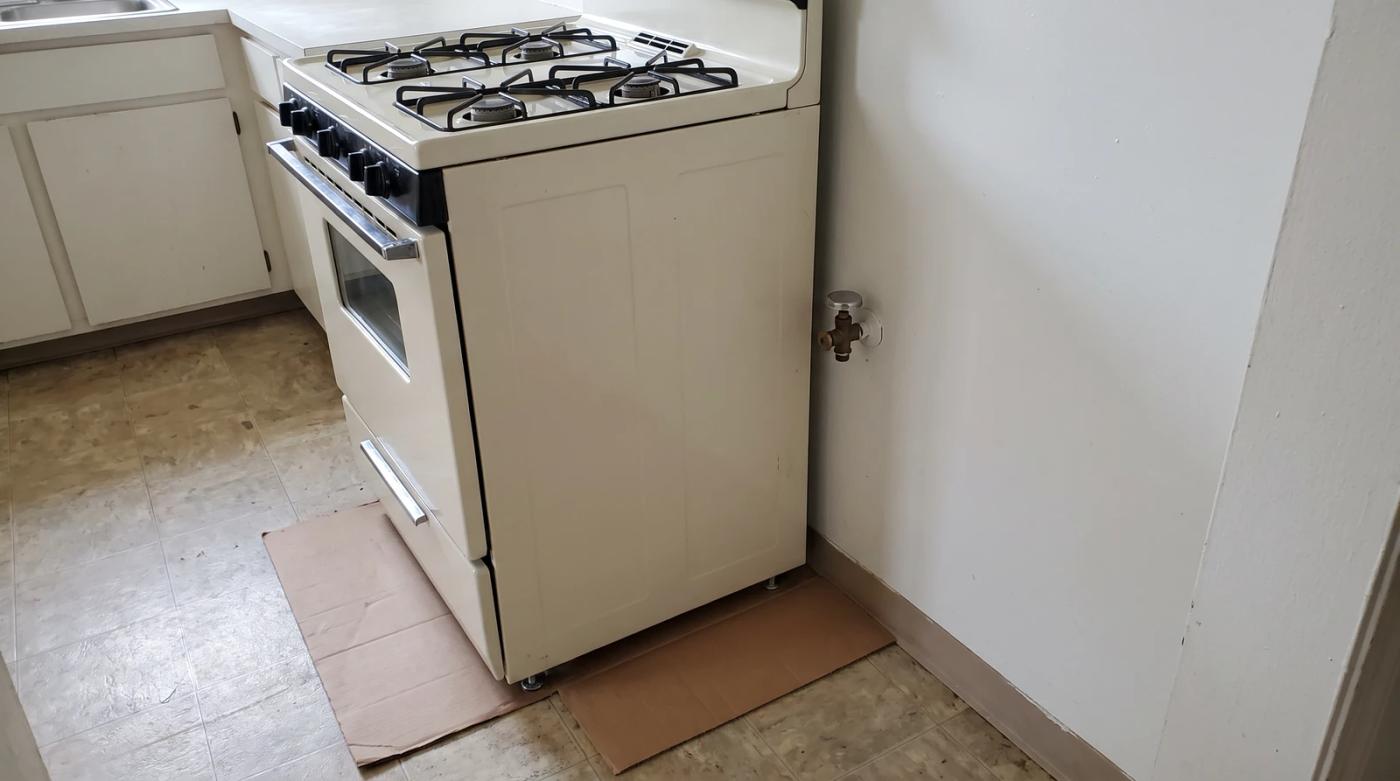
You picked out the new range and the delivery's on the calendar. The old gas stove has to go first, and it's still hooked to a pipe coming out of the wall.
That pipe is the part of appliance removal most people don't think about until the day of. Hauling a stove off isn't hard. One thing just has to happen before anyone starts pulling: the gas gets shut off and the line gets capped properly.
Here's how that works around Boise and the rest of the Treasure Valley, and which parts you can handle yourself.
Who should disconnect a gas stove?
Someone who's qualified to work on gas lines. That's usually a licensed plumber or an HVAC tech. If a new gas range is going in the same day, the installer may handle the swap.
Most of southern Idaho gets its natural gas from Intermountain Gas. If you're not sure about your line, or you smell gas at any point, get everyone out of the house and call them from outside.
So why not just turn the valve yourself?
Behind most gas ranges there's a shutoff valve and a flexible connector running to the back of the stove. Turning the handle looks easy. The trouble is what comes after. A fitting left open with no cap. An old valve that doesn't fully seal because nobody's touched it since the house was built. A connector that gets yanked when the stove slides out.
A plumber can shut it off, cap it and check for leaks in one visit. If you're remodeling, ask whether the line should be capped at the valve or cut back further. That depends on what's going in next.
Prepping the stove for appliance removal
Once the gas is off and capped, the rest is mostly common sense. It also makes the haul go a lot quicker.
Start with the storage drawer at the bottom. It's usually full of sheet pans, lids and the odd muffin tin. Empty it, then pull the drawer all the way out.
Take off the oven racks, grates and burner caps too. They rattle loose when the stove gets tilted, and those little caps love to roll under the dolly.
Then there's the plug. Gas ranges still use a regular outlet for the igniter, clock and oven light, while electric ranges use a big 240-volt one. Either way, unplug it before it moves.
Tip: Pull the storage drawer out before you touch anything else. With it gone, you can usually see the anti-tip bracket at the back foot and the gas valve from the front, so you know what you're dealing with before anything shifts.
That anti-tip bracket catches a lot of people off guard. It's a small metal piece screwed to the floor or wall that grabs a rear leg, so the stove can't tip forward if a kid climbs on the open door. Slide the stove straight out and it'll stop short. Lift the front an inch or so as you pull and the leg comes free.
And look at your floor. A stove dragged across vinyl or hardwood will leave marks from the leveling legs, so slide a piece of cardboard or an old rug under the front feet.
What changes the cost of hauling a stove
I'm not going to throw out a number, because it really depends on the job. Here's what moves it.
Whether the gas is already disconnected. If the stove's still plumbed in, it has to wait until a pro disconnects it. Yes, I'd love to haul it for you, but I shouldn't be the one disconnecting it.
Access. A ground-floor kitchen with a straight shot to the front door is easy. A second-floor condo, a tight hallway in an older North End house, or the stairs in a split-level on the Bench all take more time and effort.
The stove itself. A basic freestanding range is one thing. A double oven or a big pro-style range with heavy cast grates is a different job.
What else is going. Doing a full kitchen tear-out? The old dishwasher, microwave and maybe the fridge can often go in the same load, and one trip usually beats several.
The easiest way to find out is to send a photo of the stove and the path out of the house to whoever's hauling it. You'll get a real price instead of a guess.
Where an old stove goes after appliance removal
A stove that still works has some options. Idaho Youth Ranch and St. Vincent de Paul both take donations around the valley, but large appliances aren't always on their list, so call the store before you load anything.
If it doesn't work, it's mostly steel, and steel gets recycled. Ranges are actually one of the simpler appliances to deal with, since they don't have refrigerant in them like a fridge or freezer.
You can haul it yourself, too. Ada County residents can use the Ada County Landfill, and folks in Nampa and Caldwell have Canyon County's landfill. Appliances are often handled separately from regular trash, so check the current rules and fees before you go.
Bring a second person and a dolly. A stove is awkward to lift, and the oven door likes to swing open at the worst possible moment.
One more thing. The scrap value of a single stove isn't much. Recycling it is still the right call, it just won't pay for the new one.
Before the new range shows up
Get the gas shut off and capped by someone who does it for a living. Empty the drawer, unhook the anti-tip bracket and clear a path out of the kitchen. That covers most of it.
If you'd rather not wrestle it out the door yourself, Man of Steel Junk Removal, based in Eagle, does appliance removal. Text a photo to (208) 391-0221 and I'll send a price back. No pressure either way.
Need help with appliance removal?
Name and number is all it takes. Man of Steel Junk Removal will get back to you with a price.
Rather just ask?
Skip the reading. Man of Steel Junk Removal picks up the phone.
