
Furniture Removal in Boise: What Donation Centers Turn Down
Not every couch or dresser gets accepted at Boise donation centers. Here's what usually gets turned down, why, and where rejected furniture ends up.
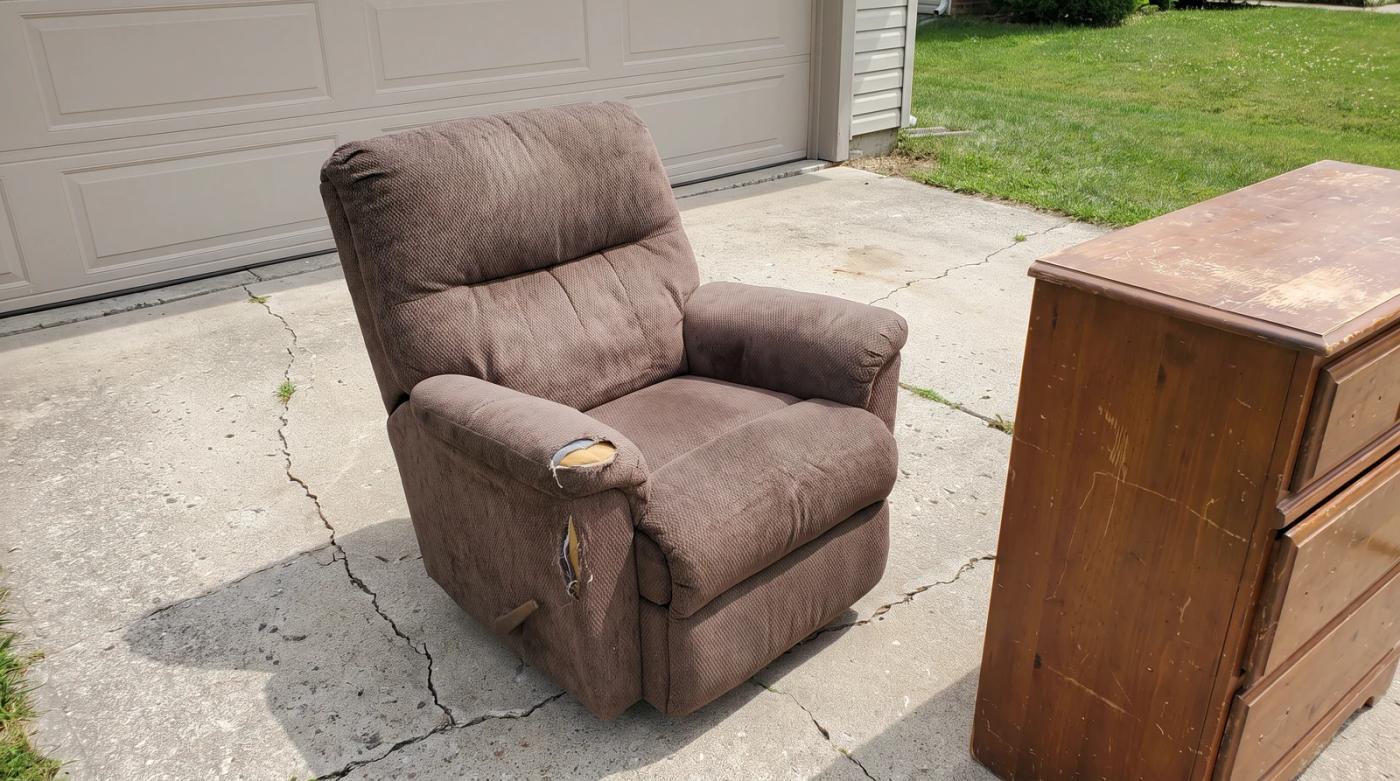
You've got a couch in the garage, and somewhere in the back of your head there's a note that says donate it. Before you borrow a truck and haul it across town, here's something worth knowing. A lot of DIY furniture removal in Boise ends at a donation dock, with someone politely telling you no.
The donation centers aren't being picky for fun. They can only keep what somebody will buy, and every piece they accept and can't sell is one they have to pay to get rid of.
So here's what tends to get turned down, why, and what happens to it after.
Why furniture removal stalls at the donation dock
Places like Idaho Youth Ranch and St. Vincent de Paul run thrift stores. Your dresser has to sit on a sales floor and look good enough that a shopper picks it over something new.
Anything that gets in the way of that is a problem. Stains, rips, smells, broken parts. If they'd have to fix it first, it probably isn't making it to the floor.
Each organization sets its own rules, and those rules change. Check their current guidelines before you load anything. What follows is the general pattern around the Treasure Valley, not anybody's official list.
Couches and recliners get the hardest look
Upholstered stuff tends to get the strictest look. Couches, sectionals, recliners, padded dining chairs.
Pet hair and odor are the big ones. You stop noticing how your own house smells after a while. The person at the dock notices right away, and cigarette smoke is the same story.
Then there's what you can't see from across the room. Cushions that have gone flat. A frame that creaks when you sit. A recliner that sticks halfway open, or seams that are starting to split.
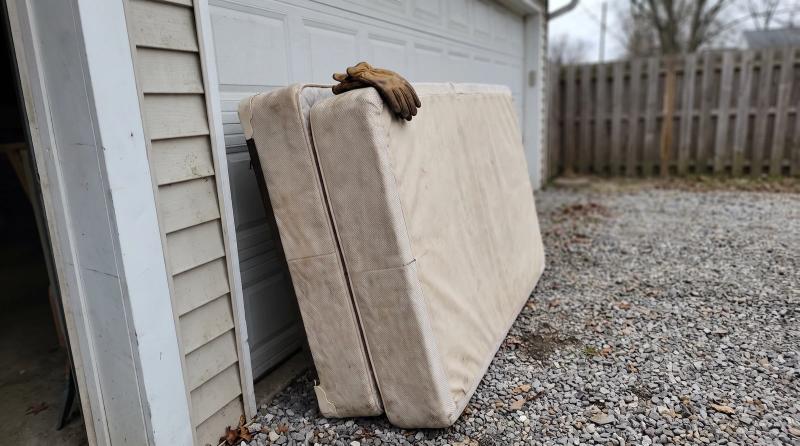
Mattresses and box springs are their own headache. A lot of thrift stores won't take them at all, so don't build your plan around that.
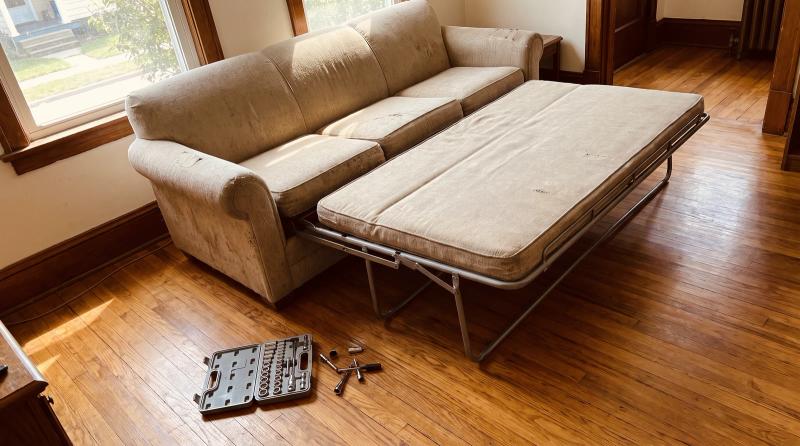
Tip: Snap a couple of daylight photos of the piece, including the worst spot on it, and ask the donation center whether they'd take it before you load up. It beats unloading a sleeper sofa in a parking lot and then loading it right back.
Wood furniture isn't a sure thing either
Solid wood does better. It's still not automatic.
Particleboard is the usual catch. Those flat-pack bookcases and dressers don't love being taken apart and moved twice. Once the corners swell or the screws strip out, the whole thing wobbles, and nobody's buying a wobbly dresser.
Water damage sinks plenty of pieces too. Boise's dry summers are easy on wood, but a dresser that spent a few freezing winters in a garage or a damp basement can come out warped, peeling, or with drawers that won't shut.
Missing parts are another one. A bed frame with no rails, a table with a cracked leg. Cribs and some kids' furniture come with extra safety rules, so a lot of places just pass on them.
And then there's the big, dated stuff. Entertainment centers built for tube TVs are the classic example. They're heavy, they're solid, and almost nobody wants one anymore.
Furniture removal for the pieces nobody takes
This is the part people don't think about until they're standing in the driveway with a couch nobody wanted.
If it can't be donated, it's headed to a landfill or transfer station. In Ada County that means the Ada County Landfill. Out in Nampa and Caldwell, Canyon County runs its own landfill. Either way there's a disposal fee, and you're the one lifting it in and out of the truck.
Metal is the exception. Steel bed frames, filing cabinets and metal patio sets can go to a scrap recycler instead of the dump.
When I pick up furniture, I sort it the same way. Usable pieces go to donation, metal gets recycled, and whatever's left goes to the landfill.
How to make a decent first guess
You don't need to be an expert. Just look at the piece the way a stranger shopping for it would.
Would you sit on that couch if you saw it in a store? Would you put your clothes in that dresser? If the honest answer is no, it's probably not a donation candidate.
If it's close, ask. A quick call or photo is a lot less work for everybody than a rejection at the dock.
A mix of good and bad is normal, by the way. After a move or a downsize, plenty of houses in Meridian, on the Boise Bench, in the North End or out in the newer subdivisions in Star and Middleton end up with a little of both.
Before you load anything up
Donation centers take what they can sell. Odor, damage, missing parts and tired particleboard are usually why they pass, so be honest about condition and have a plan for whatever doesn't make the cut.
If you'd rather skip the guessing, text a photo to (208) 391-0221 and I'll send you a price. The good pieces still go to donation. And yes, I'd like the work, but if it's one nice dresser that Idaho Youth Ranch would probably take, I'll tell you that too.
Need help with furniture & heavy item removal?
Name and number is all it takes. Man of Steel Junk Removal will get back to you with a price.
Rather just ask?
Skip the reading. Man of Steel Junk Removal picks up the phone.
