
Boise Hot Tub Removal: What to Do With the Empty Pad
After hot tub removal in Boise, you're left with a slab, a dead patch of grass, and a live wire. Here's what to do with each one, and what it costs.
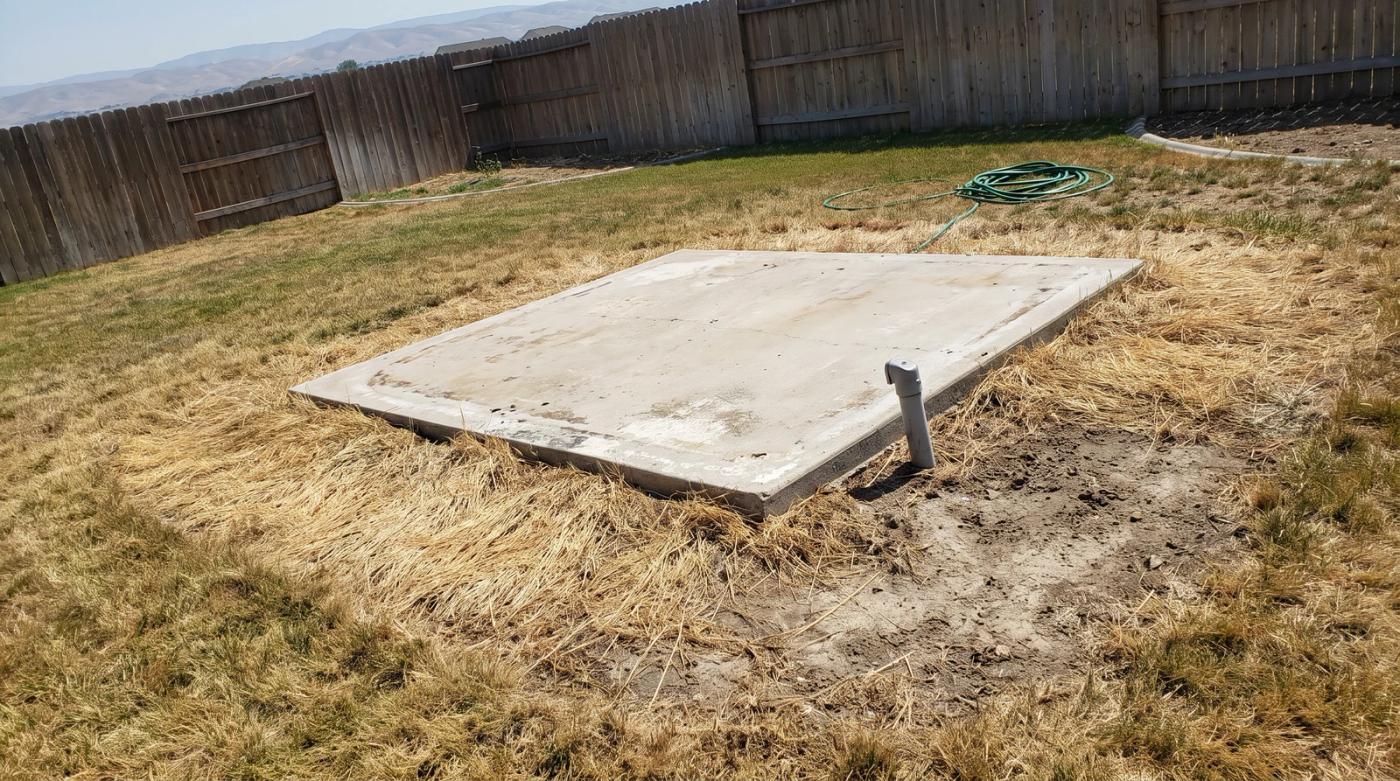
Most of a hot tub removal is boring in a good way. A couple weeks ago it was two hours off Floating Feather in Eagle, tub strapped to the trailer, gone.
Then the homeowner stood there looking at the ground and said the thing I hear on nearly every one of these. "Huh. I didn't think about that part."
Under it was a gray concrete slab, a ring of flattened yellow grass, and a stub of conduit sticking out of the dirt with live wire still in it.
The tub leaving is the easy half. What it was sitting on is what people call me back about.
Around the Treasure Valley it's usually a poured pad, four to six inches thick, a foot wider than the tub on every side. That's what I find in Meridian and in the newer Star and Middleton subdivisions, where the tub went in with the original landscaping.
Older yards in Nampa and Caldwell lean toward pavers on compacted gravel. Cheaper to build, easier to undo, and usually a little swaybacked by the time the tub comes off.
Then there's the deck setup, where the shell drops into a cutout in the decking. That one's a whole different job, and I'll get to it.
The slab after a hot tub removal: keep it or break it out
First question I get: does the concrete have to go?
Honestly, no. Plenty of people leave it.
An 8x8 pad that's already level and already draining makes a fine patio. Shed base, grill spot, somewhere to set a fire table. You've got a poured foundation sitting there for free, and breaking it out now to pour a new one in two years is a rough way to spend money.
If it does come out, know what you're signing up for. Concrete is heavy in a way that surprises people.
A pad that looks small fills a trailer by weight long before it fills it by volume. Most pads around here have rebar or wire mesh in them, so they come out in chunks that have to be cut apart first.
Clean concrete also goes to a recycler instead of in with household junk at Hidden Hollow. Add up the breaking, the loading and the weight, and the slab usually runs more than hauling the tub did.
Tip: Measure the pad before you decide anything. Most hot tub pads sit close to 8x8, which is about the footprint of a 10x10 shed with room to work around it. Check which way water drains, too. Away from the house you've got a patio. Toward it, that's a different conversation.
The wire nobody thinks about
Most tubs here run on a 50-amp, 240-volt circuit with a GFCI disconnect box on the wall a few feet away. Flipping the breaker off isn't the same as dealing with it.
I kill the power and disconnect the tub as part of the job. Pulling that circuit out of the panel, capping the wire properly, or taking the disconnect box off the wall is electrician work. Worth the hour.
Live wire in abandoned conduit is a bad thing to leave in a yard. The next owner finds it, or your kid does.
At a minimum, get the breaker labeled dead and the box sealed or gone. Planning to landscape over that trench? Have the wire pulled while the ground is still open.
When hot tub removal means cutting into a deck
This is the one that turns a two-hour job into a weekend.
When the tub sits in a cutout, the framing around it was built for that exact shell. Take the tub out and you're looking at a hole with no joists across it and decking that stops short on all four sides.
Filling it means new framing, new boards, and boards that don't match. Cedar and treated lumber both weather, so a fresh patch in a ten-year-old deck stands out for a season or two, however clean your cuts are. Stain helps some. Time helps more.
Older decks on the Boise Bench and in the North End sometimes hide a second surprise. That framing carried weight it was never sized for, and once the load comes off you can spot sag or find rot. Worth a look before you close it up.
Getting the grass to come back
That yellow ring isn't dead soil. It's grass that hasn't seen sun or water in five years, and it usually comes back with a little help.
Timing matters more than whatever you buy at the store. Laying sod or throwing seed down in a dry Boise July is a losing fight.
Early spring, or mid-September into October, gives you cool nights and enough moisture that you're not babysitting a sprinkler. Pull a tub in August and the move is topsoil, keep it damp, and do the real repair in fall.
The dirt under a slab is packed down hard. Break it up a few inches and mix in topsoil before you seed, or you'll get a thin rectangle of grass that stays a rectangle.
The bottom line
Plan for what's under the tub, not just the tub.
Decide early whether the slab stays, because that's the piece that moves the price. Get a licensed electrician on the wiring. If it's set into a deck, budget for the patch and for boards that won't match yet.
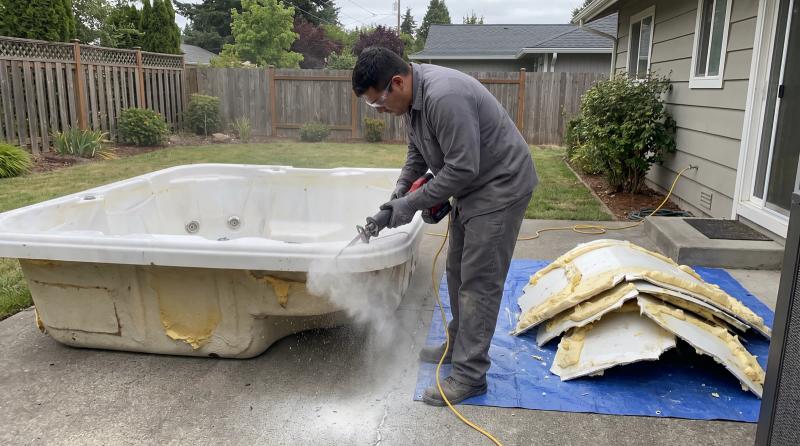
The tub itself is straightforward. The shell rides out in the dump trailer to the landfill, and the frame metal, pump and heater get recycled.
If you've got one sitting out back and you're not sure what you're looking at, text a photo to (208) 391-0221 and I'll tell you what's probably under it and what it'd run either way. No pressure if you'd rather keep the pad. Plenty of people do.
Need help with hot tub removal?
Name and number is all it takes. Man of Steel Junk Removal will get back to you with a price.
Rather just ask?
Skip the reading. Man of Steel Junk Removal picks up the phone.
