
Is Sod Considered Yard Waste? What Counts and What's Just Trash
By Tommy Simonson, owner of Man of Steel Junk Removal · Updated
Is sod considered yard waste? Learn why most curbside carts turn it away, what counts as yard waste, and where sod, dirt, rock and branches end up.
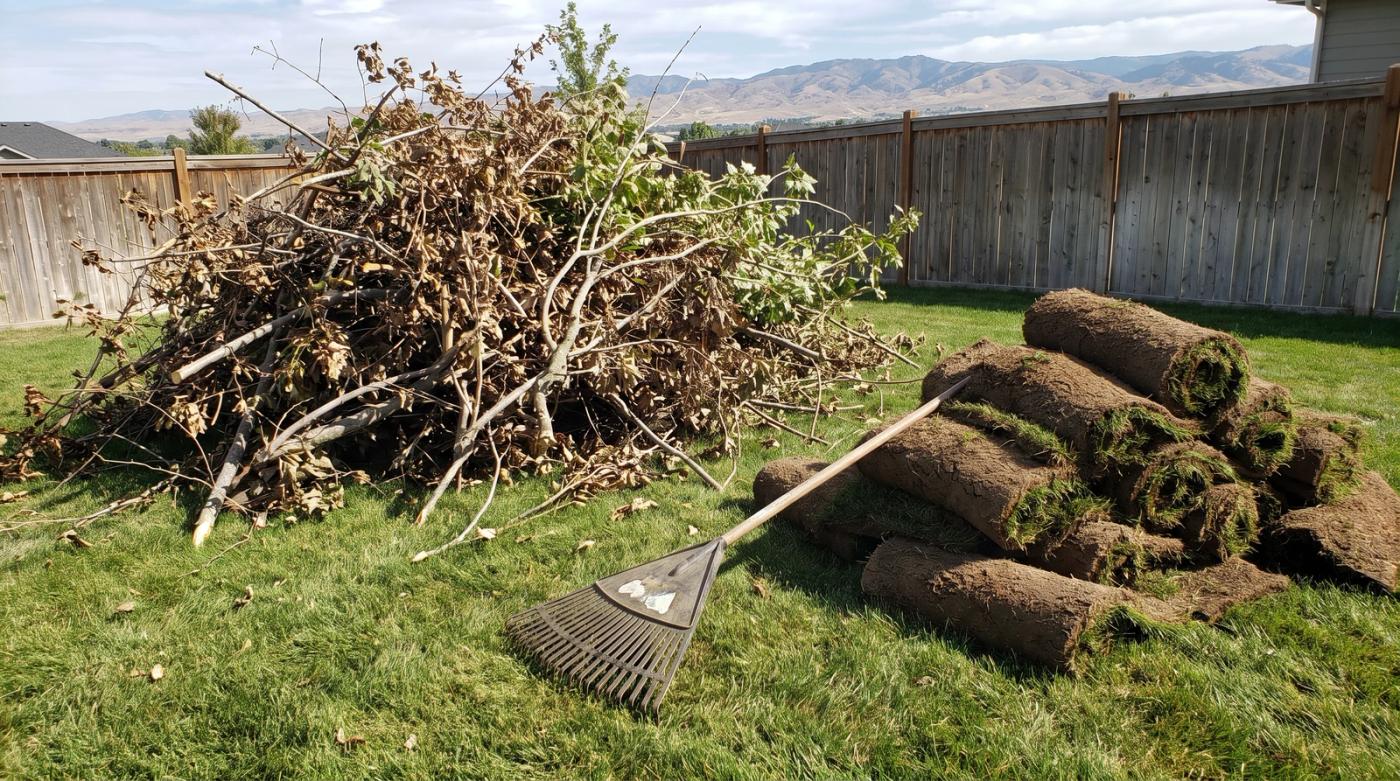
Is sod considered yard waste? For most curbside programs, no. Sod is grass with a layer of soil and roots still attached, so it gets treated more like dirt than like yard waste, and a lot of city carts turn it away.
A private hauling service can still take it. It just costs more to haul than its size suggests, because weight matters as much as volume, which is why it's worth knowing what's in your pile before you ask for a number.
A pile that gets called "just some yard waste" often turns out to be branches up front, a mound of stripped sod behind them and a row of river rock off to the side. Three piles, three different answers, and only one of them is simple.
Is sod considered yard waste, or is it trash?
Most programs describe yard waste as any natural waste that comes from the plants in your yard: branches, brush, leaves, grass clippings, hedge trimmings, weeds, pine needles, and the dead juniper you finally lost patience with. If it grew there and it's still plant or plain wood, it counts.
So what do most programs consider yard waste? Here's how the usual piles sort out.
| What's in the pile | City yard waste cart | Better option |
|---|---|---|
| Grass clippings, leaves, small branches | Usually yes | Compost |
| Sod and dirt | Usually not considered yard waste | Hauler, weight matters |
| Rock, pavers, concrete | No | A separate heavy load |
| Fence boards, treated lumber, plastic | No, that's garbage | Junk removal service |
| Metal edging, old tools, tomato cages | No | Recycling |
Here's where folks get surprised. Old fence boards aren't yard waste. Neither is the treated lumber from a raised bed, the plastic edging, the cracked kiddie pool, or that split bag of potting soil that's been leaning against the shed for who knows how long.
Those all came out of the yard, sure. But painted, treated and manufactured material can't ride along with clean green waste.
It gets handled as household waste instead. Different pile, different price, no big deal.
What about sod itself? On paper it looks like any natural waste that comes off a lawn. But the sod info on most city websites boils down to one idea: if it has soil stuck to it, it isn't green waste.
That's why sod is not considered yard waste by most curbside programs. The dirt makes carts heavy, and it isn't what a compost site wants. Local regulations vary, so check your city's list before you fill the cart.
Tree rounds count, up to a point. I'll take log sections all day.
But a big round of green cottonwood is a lot heavier than it looks, and if you've got a stack of them, we're having a weight conversation, not a volume conversation.
Good to know: Grass clippings left on the lawn after mowing don't need any pickup. They break down in place and feed the grass, so there's less yard waste in the cart.
Why dirt and rock change the price
Brush is the easy kind of yard waste. It's bulky and light, fills a trailer fast and weighs almost nothing. That's the good kind of load.
Sod is dirt with a haircut. Rock is rock.
Both look like small piles and weigh like enormous ones, and that's a common reason a quote comes back higher than someone was picturing.
A strip of sod still damp from the sprinklers can outweigh a much bigger pile of branches, and the F-350's suspension feels the difference.
What moves the price up or down:
- Weight. Sod, dirt and rock cost more to move than brush.
- Moisture. Wet soil and fresh-cut wood weigh more than dry.
- Mixing. Clean green waste, recycling and mixed waste go different places, so a sorted pile is simpler.
- Access. A pile by the driveway loads faster than one behind a narrow side gate.
- Volume. Light brush comes down to how much trailer space it takes.
Heads up: If you're pulling sod or digging out a planting bed, let it dry in the sun before anybody hauls it. Wet soil is a lot heavier than dry, and in a Boise July it dries fast. Same dirt, less weight, cheaper haul for the same yard waste.
Concrete, brick, pavers and landscape rock are their own kind of waste. I can usually take them, but tell me up front, because it changes how much I can legally put on the trailer in one trip.
If you're putting in new turf, ask whether the company that supplies sod will haul off the old rolls. Some include that service and some don't, so ask before the old lawn gets cut out.
Where it ends up: compost, recycling or the landfill
Clean yard waste can go to compost. That's why I care whether there's a chunk of PVC pipe buried in the middle of your brush pile, and why I poke around a little before I start loading. A compost site or green waste yard wants plant material and nothing else.
In Ada County, mixed junk generally goes to the Hidden Hollow landfill off Seamans Gulch. That's also where landscape waste ends up when it's mixed with trash and can't be separated.
Metal comes off the trailer first and goes to recycling. The wheelbarrow with the flat tire, the bent tomato cages, the rusted section of chain link, all of that goes to metal recycling instead of getting buried. Any hauling service worth calling should be doing the same.
That's a small environmental win, and it saves public landfill space for stuff with nowhere else to go.
Anything still usable goes to donation. A lot of patio furniture that people have already written off as trash is still good enough for someone else to use.
Do you need to sort it yourself first? No. But if you already know the rock is separate from the green waste, say so in the text and I can give you a real number instead of a guess.
When to book, and when curbside collection is enough
Spring is the busy season. A lot of people around Eagle, Star and Middleton tackle the yard on the same few weekends, and spring wind can bring down big branches around the Boise Bench and everywhere else.
Fall is quieter and honestly easier for a seasonal yard cleanup. Leaves are down, the ground's firm, and nobody's standing on a hot driveway.
Winter works too, but frozen sod is basically a boulder. If you've got dirt or a stump to move and it's January, waiting for a thaw can genuinely save you money.
One more thing for the foothills folks. Don't sit on a big dry brush pile through August, because that waste is fuel, and it's the one call I'd rather get early than late.
And yes, I'd like the work. But if it's three branches and a bag of leaves, your green cart handles that alongside your trash pickup. Save your money for the pile that won't fit.
Every city sets its own pickup yard waste regulations, but the setup is usually similar. The curbside yard waste cart is built for light, loose yard trimmings, your regular trash pickup is for household garbage, and anything heavy or oversized needs a separate service.
If your yard waste won't fit in the cart with the lid closed, or it's sitting at the curb in a pile the city won't touch, that's your sign to call a hauling service.
Branches are cheap and bulky. Dirt, sod and rock are compact and heavy. Fence boards and plastic aren't yard waste at all, and knowing which pile of waste you've actually got is most of the pricing right there.
My Yard Debris Removal service covers branches, brush, sod, dirt and rock, and I'm based right here in Eagle. I run one truck, so send me a photo with something in the frame for scale. A garbage can or a shovel works fine.
Mention whether there's dirt or rock mixed in and I'll text a price back. No crew, no call center, just me. Text or call (208) 391-0221 and we'll sort out what you've got.
Frequently asked questions
Does curbside collection take sod?
Usually not. Most curbside programs take grass clippings, leaves and branches but ask you to keep sod, dirt and rock out of the cart. Check the yard waste collection page for your city's service to see its current list.
What's the best way to get rid of garden debris?
Light green waste goes in the yard waste cart on pickup day, a little at a time. Bigger piles, mixed loads or anything heavy are a better fit for a hauling service or a drop-off at a compost site.
Where do you take old turf and dirt?
Clean soil can often be reused to fill low spots around your own yard. Otherwise, a hauler can take it with the rest of your waste, or you can ask a landscape supplier or the landfill whether they accept it.
Does a hauling service handle recycling?
Related reading: Storm Debris Removal in Boise After a Big Windstorm and Yard Debris Removal in Boise After the Tree Trimming Is Done.
A good service does. Metal, usable items and clean green waste should get pulled out of the load so they go to recycling, donation or compost instead of being buried.
Need help with yard debris removal?
Name and number is all it takes. Man of Steel Junk Removal will get back to you with a price.
Rather just ask?
Skip the reading. Man of Steel Junk Removal picks up the phone.
