Can Yard Waste Go in a Dumpster? What's Allowed and What Gets Flagged
By Tommy Simonson, owner of Man of Steel Junk Removal · Updated
Can yard waste go in a dumpster? Learn what's accepted, why dirt and sod hit weight limits, why mixed loads get flagged, and other Boise disposal options.
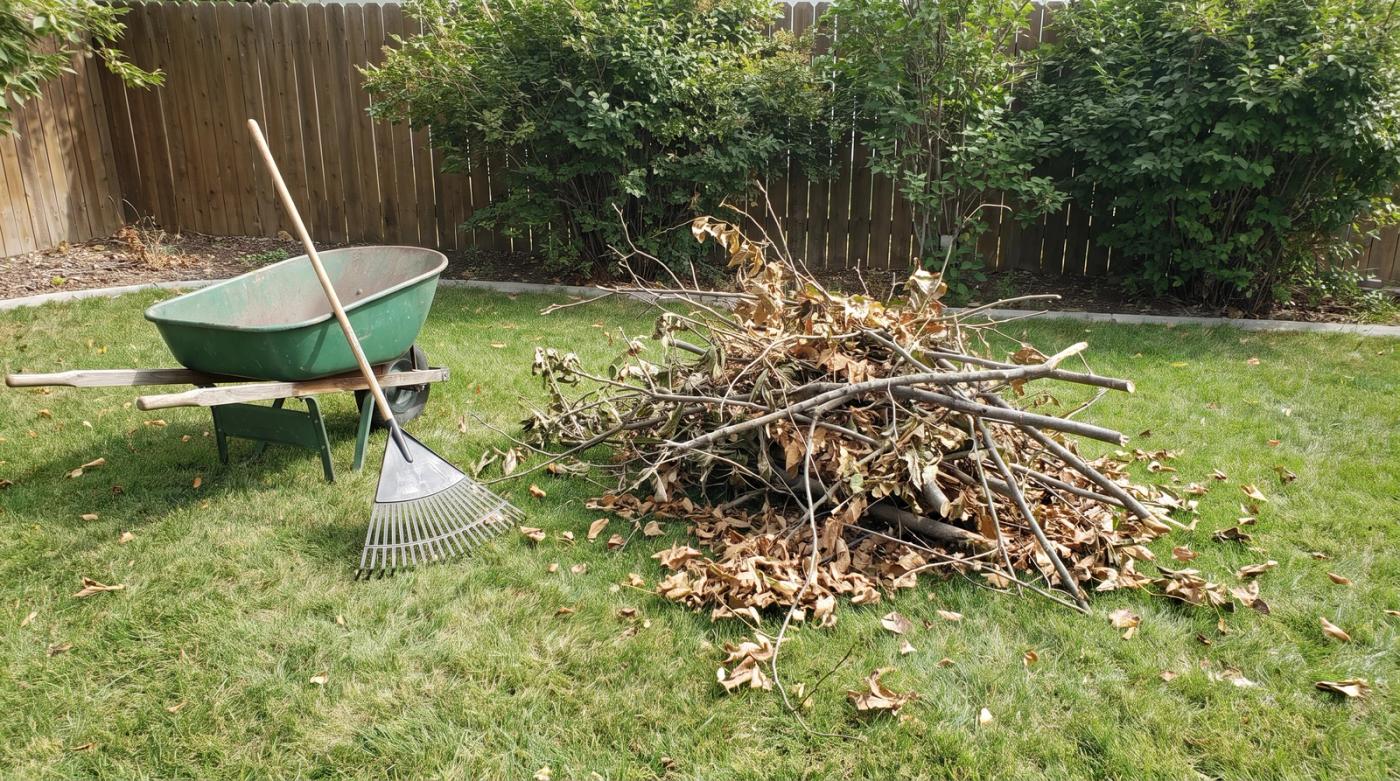
Can yard waste go in a dumpster? Yes, with most rental companies, but branches and leaves are treated differently from dirt, sod and rock, and mixing in household junk can change the rules for the whole load. Light, bulky stuff like prunings and yard clippings is usually fine. Heavy stuff like soil, rock and stumps is where people get surprised by weight limits and extra charges.
I'm Tommy, and I run Man of Steel Junk Removal out of Eagle with a dump trailer, so I see this from the hauling side. Here's what a rental service cares about, what your city takes, and when a dumpster makes sense.
Can yard waste go in a dumpster?
Yes, but "yard waste" covers a lot of ground. To a dumpster company, a pile of pruned limbs and a pile of dug-up sod are two completely different loads.
Most companies sort this stuff into two groups: light organic material and heavy material. That decides the size of dumpster you need and how the load is priced.
Branches, brush and leaves
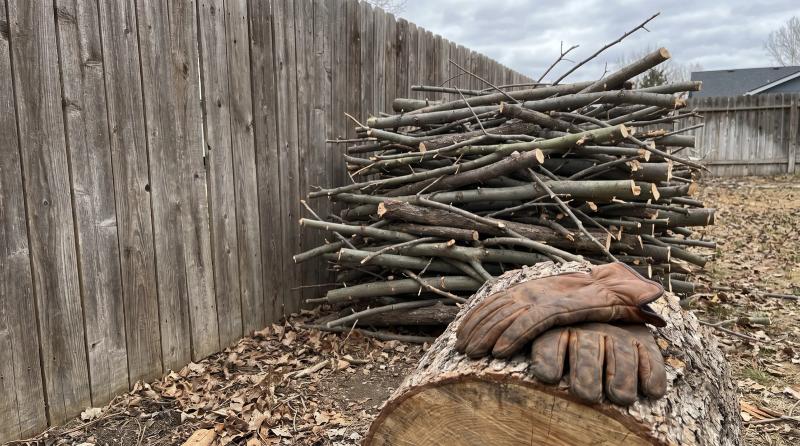
Brush, branches and leaves are the easy part. They're light, they compost cleanly, and almost every rental company lists them as accepted materials.
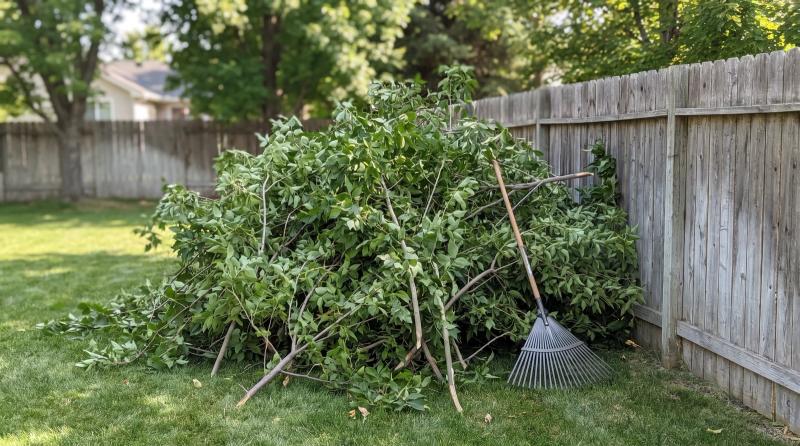
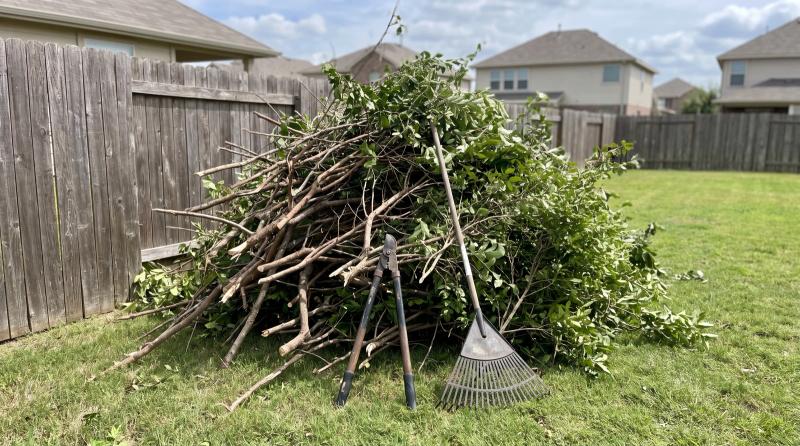
The catch is space, not weight. Limbs stick out at odd angles and leave big air pockets in a dumpster. Bagged leaves can fill a container a lot faster than you'd think, and loose leaves blow around if the bin isn't covered.
A few things help:
- Cut limbs short enough to lie flat.
- Break down piles so they don't tent up.
- Put the heaviest, flattest stuff on the bottom of the dumpster.
All items need to fit completely below the top edge. Most companies won't haul a dumpster with limbs hanging over the rim.
Quick tip: Stomp down the pile as you go and lay longer pieces in alternating directions. You'll fit a lot more in the same space.
Grass clippings and sod
Grass clippings are light when they're dry and surprisingly heavy when they're wet. A spring mow after a rain weighs a lot more than a July mow in Boise's dry heat.
Rolled-up sod has soil stuck to the roots, so it behaves more like dirt than turf. If you're tearing out a lawn to put in xeriscaping, treat that sod as a heavy load.
Dirt, rock and stumps (the weight problem)
Dirt, rock and stumps are where a yard dumpster goes wrong. These materials are dense, and every dumpster has a weight limit on top of its size.
Roll-offs come in standard sizes like 10, 20, 30 and 40 yards. Those numbers measure volume, not weight. You can fill a small dumpster partway with soil and already be over what the truck is allowed to carry. Ask the company for the weight limit in writing before the dumpster gets dropped off.
That's why many companies want dirt, rock and concrete in a separate "clean fill" dumpster that's only partly filled. Stumps usually come with a root ball full of dirt, so they get lumped in here too.
Heads up: If dirt or gravel gets mixed into a load booked as light green waste, many companies will reclassify the whole thing. That can mean overweight charges, or the driver won't take it until it's sorted.
Contaminated soil, like dirt soaked with oil, fuel or chemicals, doesn't belong in a regular dumpster at all. It needs special handling.
Why can't yard trimmings go out with regular trash?
Many cities keep yard trimmings out of regular garbage on purpose. Green material eats up landfill space, and it does more good in compost and recycling programs.
A load of clean grass, leaves and limbs can often go to a compost or green waste recycling area. Once you toss in a broken chair, a bag of household garbage or some old paint cans, it's no longer clean. It's mixed debris.
That's why a rental service asks what's going in before they drop the dumpster. Your answer decides where the load goes and how it's priced. In some areas, a local rule says green waste has to stay separate. In others, it's about the company's own disposal costs.
Unacceptable materials that commonly turn up in a standard yard cleanup:
- Paint, stain and pesticide containers
- Propane tanks and fuel cans
- Tires
- Railroad ties and treated lumber (rules vary)
- Batteries from mowers and trimmers
Construction debris can go in a general roll-off with most companies, just not in a dumpster booked for green material only. If you're tearing out an old fence and clearing the overgrowth behind it, mention both and ask which bin your construction debris can go in.
What's the best way to get rid of garden waste?
The best way depends on how much you have, how heavy it is, and how much of the work you want to do yourself. Here are four options around the valley, from the curbside cart to a haul-away service.
The curbside compost cart
For everyday clippings, your curbside cart is usually the cheapest path. Boise offers a compost cart for trimmings and food scraps inside city limits. Other cities around the valley handle green waste differently, so check with your hauler or your city's website.
Carts are great for weekly mowing and fall leaves. They're not built for a whole tree's worth of limbs or a torn-out lawn.
Good to know: Curbside programs have rules on bundle size, bag type and what counts as green waste. Limbs that are too long or too thick usually get left at the curb.
Hauling it to a drop-off site yourself
If you have a truck or trailer, you can haul it to the dump yourself. Around Boise, that means the Ada County landfill. For Nampa and Caldwell, Pickles Butte landfill is the main spot.
Fees, hours and sorting rules change, and green waste often has its own area apart from regular garbage. This option is cheap in cash and expensive in time, especially if you're making several trips from Star or Middleton.
Renting a roll-off dumpster
Renting a roll-off is a popular yard waste removal option for big, slow projects. If you're clearing an overgrown lot in the Eagle foothills over a few weekends, a dumpster in the driveway lets you work at your own pace.
The downsides:
- You do all the loading.
- The dumpster sits on your driveway, which some HOAs have rules about.
- Weight limits make it a poor fit for dirt, rock or sod.
- A roll-off dumpster is dropped and picked up by a big truck, so it needs clear access to a firm, flat spot.
Not sure which size to book? Describe the pile to the rental company and ask what they'd suggest. A smaller dumpster that fits the job is easier to place than a big dumpster that sits half empty.
Having someone load it and haul it away
If the pile already exists, it often makes sense to have it loaded right where it sits. Nothing sits in the driveway, and you don't spend your weekend lifting.
That's how yard debris removal from a hauling service works. The hauler shows up with a truck or trailer, loads the pile and takes it to the right place. Any metal in it, like old fencing or a rusty wheelbarrow, can go to recycling.
If you've got a small pile and a compost cart, use the cart. A haul-away service earns its keep on the big one-time jobs: storm cleanup, a full lawn tear-out, or a backyard nobody's touched in years.
Frequently asked questions
Can I put grass and leaves in my garbage can?
It depends on your city. Some cities want them in a compost or green waste cart, not the garbage can, so check your hauler's rules.
Can you put tree branches in a dumpster?
Yes. Tree limbs are accepted in almost every yard waste dumpster, as long as they're cut short enough to lie flat below the rim.
How much is a dumpster for green waste?
It depends on the dumpster size, how long you keep it, what the load weighs and local disposal fees. Heavy material like dirt or sod pushes the cost up fastest, so get a quote based on what you're actually tossing.
How do you get rid of leaf bags?
Paper bags can usually go in a compost cart or to a green waste drop-off. Plastic bags often need to be emptied first, since many compost sites can't take plastic. Then put the empty bags in your regular trash.
Picking the right fit for your pile
Most green waste can go in a dumpster. The trouble starts with weight and with household trash mixed in. Keep heavy apart from light, know what your city takes, and match the option to the size of your pile.
If you're unsure about one item, ask the rental company or the hauling service before it goes in the dumpster.
Related reading: Brush Removal Cost: Price Factors, Disposal and What Counts as Yard Waste and Storm Debris Removal in Boise After a Big Windstorm.
If you'd rather skip the loading, text a photo to Man of Steel Junk Removal at (208) 391-0221. I'll send you a price, and you can decide from there.
Need help with yard debris removal?
Name and number is all it takes. Man of Steel Junk Removal will get back to you with a price.
Rather just ask?
Skip the reading. Man of Steel Junk Removal picks up the phone.
