
Interior Demolition Before a Remodel: Boise Guide to Tear-Outs
By Tommy Simonson, owner of Man of Steel Junk Removal · Updated
Planning interior demolition before a remodel? Boise guide to what a tear-out involves, when to DIY it, permits to check and where the heavy debris goes.
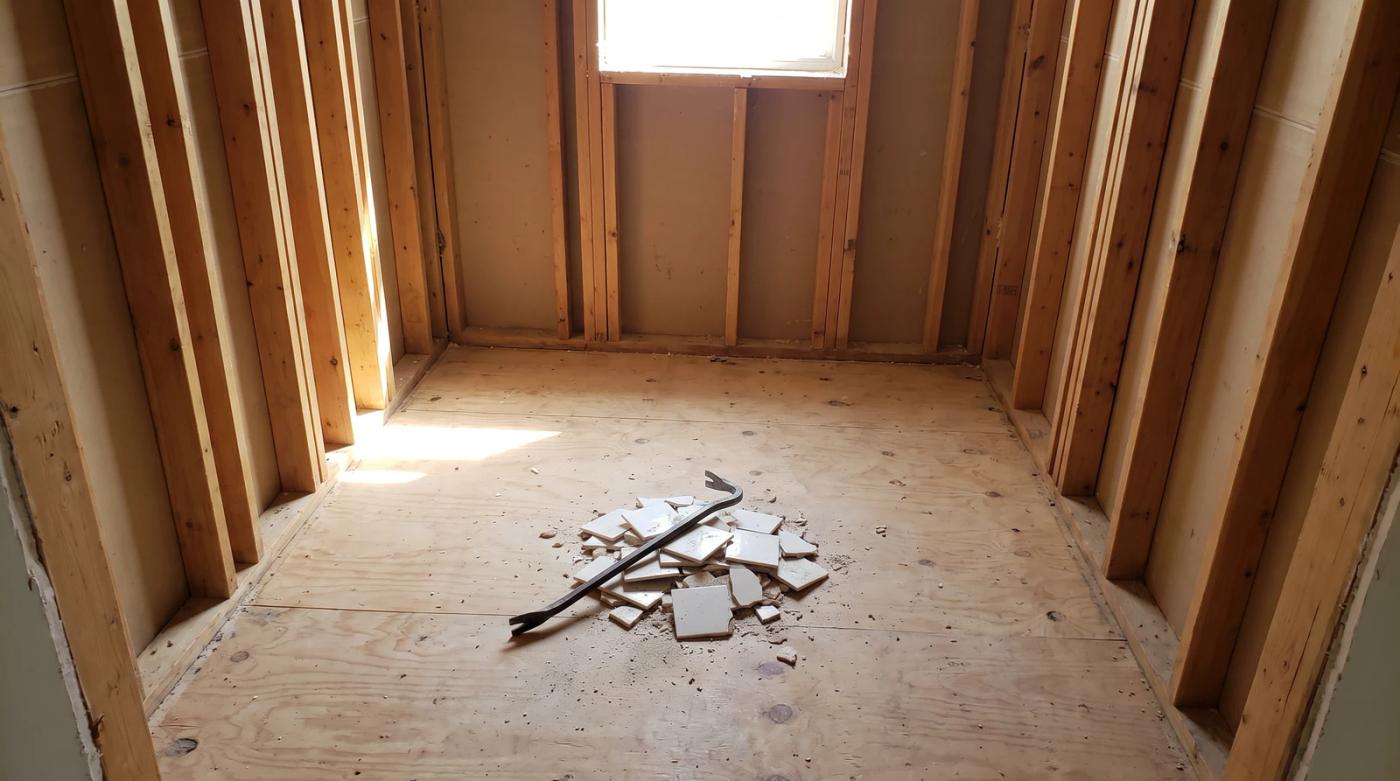
Interior demolition before a remodel: Boise homeowners can usually handle the tearing out themselves, but the hauling, the heavy pieces and the timing decide whether it's worth doing. The swinging part goes fine for most people. It's everything after the swinging that gets them.
Most interior work around Boise isn't a building coming down. It's one room stripped to the studs so a remodeler can start, and somebody halfway through realizing the fun part was also the short part.
What interior demolition before a remodel in Boise involves
A bathroom gut means the vanity, toilet, tub or shower surround, tile, mirror, flooring, and whatever somebody glued down under all of it years ago. A kitchen adds cabinets, countertop, backsplash and appliances. Sometimes a wall goes too, if the plan calls for it and it isn't holding up the roof.
That's light work. No excavator, and usually no permit, since you're not changing the existing structure or the footprint.
It helps to know where the line sits. Tear-out is taking things out. Interior construction is everything that goes back in: framing, plumbing, wiring, drywall and tile. A lot of general contractors in the city treat those as two separate jobs on the schedule, even when the same crew does both.
A plain Boise guide to the order most tear-outs follow:
- Shut off the water and the breaker for the room.
- Pull the fixtures and anything worth donating.
- Strip the tile, flooring and drywall.
- Haul it all out before the rebuild starts.
Volume is what surprises people. One bathroom doesn't sound like much until it's stacked in the hallway and you can't get past it.
Tile, mortar bed, old plaster and cast iron weigh far more than they look. A pile you could step over can outweigh a trailer packed with furniture.
The whole-home remodel vs room-by-room choice changes all of this. One bathroom fits in a hallway pile. Gutting several rooms at once, often with people still living in the house, means the debris needs to leave about as fast as it's made.
Should you do it yourself or hire remodeling services?
If you've got a free weekend, a pry bar, and a shop vac you don't love, the tear-out itself is doable. It's the one stage of the job where being a little careless is the point. None of it's getting saved.
A lot of the light demolition Boise homeowners take on is exactly this: one room, one weekend. Two things usually decide whether it's worth it.
First is the haul. Ripping out a bathroom goes faster than you'd think. Moving that debris to Hidden Hollow in a half-ton with a tarp means several round trips, depending on how much tile and mortar came out.
Check the landfill's current fees before you go, since a heavy load of tile and mortar can cost more to dump than the same pile of drywall. Add gas. Add the second tarp you'll buy at a gas station on Chinden after the first one shreds.
Second is the awkward stuff. A cast-iron tub coming down the stairs of a North End bungalow is a two-person problem at best, and the wall usually loses. Granite out of a Bench kitchen is the same story.
Most Boise remodeling services handle the tear-out one of three ways. Some do it with their own crew, some hand it to demolition contractors, and some leave it to the homeowner. Ask which way your contractor plans to go before you sign, because it changes who's hauling what.
A search for Idaho demolition services turns up a lot of crews built for whole buildings and heavy equipment. For one room, you want somebody who'll work carefully around the rooms that are staying.
Plenty of folks split it. They knock out the cabinets and drywall themselves over a weekend, then have the heavy pieces pulled and the whole mess hauled at once. Works fine.
Heads up: If the house went up before 1980, don't start ripping sheet vinyl or scraping popcorn ceiling until you've had it tested. Older places, including plenty on the Bench and in the North End, can have asbestos in the old flooring and in the black mastic under it, and old trim can carry lead paint. Those are hazardous materials. Testing first is the easy part. Finding out afterward isn't.
Where the debris from a house tear-out ends up
Not all of it hits the landfill, and it shouldn't. Remodeling debris tends to split three ways.
Anything still usable gets offered up first. A vanity in good shape, a working toilet, a cabinet run somebody could put in a shop or a rental. Donation spots like Idaho Youth Ranch and St. Vincent de Paul take a range of household items, so check what they currently accept, and there's often somebody in the Valley who'll grab a decent set of cabinets before they ever see a dumpster.
Metal gets recycled. Cast-iron tubs, old sinks, appliances, the copper and galvanized pipe that comes out with the fixtures. That stuff has a home, and it isn't the Ada County landfill.
What's left is honest trash. Broken tile, mortar, old drywall, torn-up subfloor. That goes where it goes.
So what does the haul run? Hauling prices generally come down to how much room the debris takes up and what it weighs, and heavy material moves the cost more than a tall pile of light stuff does. One bathroom's worth of debris takes up a lot less room than a full kitchen with cabinets, counters and appliances once the flooring comes up.
| What changes the haul | Pushes it up | Keeps it down |
|---|---|---|
| Weight | Tile, mortar bed, plaster, cast iron | Drywall, trim, cabinets |
| Volume | Whole kitchen with the flooring up | One small bathroom |
| Access | Stairs, basements, a long walk from the site to the curb | Ground floor near the driveway |
| Reuse | Everything goes to the landfill | Fixtures donated, metal recycled |
Quick tip: Plan the removal of the big pieces first, like the tub and the counters. The rest of the cleanup goes faster with them out of the way.
How to time the tear-out so the schedule holds
This is the one that hits people's wallets. On any remodeling job the trades come in a set order, and good tile setters and plumbers from Nampa to Star can be booked out, especially in the busy season.
Show up Monday with the room still full of the old bathroom and you've burned your guy's day. Maybe your spot in his schedule too.
Plan the tear-out to be done and hauled with some room to spare before he starts. Not the morning of. Something tends to take longer than it should, and it's usually the flooring.
If the job grows into moving walls or adding square footage, the paperwork changes. An addition, or a change to how a room gets used, can bring in the city's zoning rules, and some projects need a zoning certificate before a building permit. Check what Boise's demolition application asks for before anyone takes out a structural wall.
One more thing about leaving debris in the driveway. In January it freezes into one solid block. In March it blows down the street.
That's the short Boise guide. Demolition is easy to start and harder to finish. Swing away if you want to. Just be honest with yourself about the tub, the counters, and how many trips it takes to make the mess disappear.
If you'd rather skip that stage, text me a photo of the room at (208) 391-0221 and I'll send you a price. That way your remodeler walks into cleared-out spaces instead of a pile.
Frequently asked questions
What's the difference between remodeling and demolition?
The tear-out takes the old stuff out, down to the studs or the subfloor. Remodeling is the whole project, and interior construction is the part that builds the new design back in.
Do I need a permit to gut one room?
Usually not, if you're only pulling finishes and fixtures. The rules change once you move walls, plumbing or wiring, and that's when a permit application with Boise comes in. If the room's use changes, a zoning certificate may come first.
Should a demo crew or my contractor do the tear-out?
Either works. Some general contractors do it with their own remodeling crews, some hire demolition contractors, and a construction company based in the Valley may bring its own people. If you're trying to find top-rated Idaho demolition services for one room, ask whether they haul the debris too or leave that to you.
What about asbestos in older homes?
Related reading: Shed Demolition Prep Before Teardown: Boise Guide to Site Cleanup and How to Remove a Wooden Swing Set in Boise, Step by Step.
If the home was built before 1980, have the flooring, mastic and popcorn ceiling tested before you tear into them. If anything comes back positive, that's a job for an accredited abatement crew, not a pry bar.
Need help with demolition?
Name and number is all it takes. Man of Steel Junk Removal will get back to you with a price.
Rather just ask?
Skip the reading. Man of Steel Junk Removal picks up the phone.
