
Fence Post Removal: Concrete Footings, DIY or Hire It Out?
By Tommy Simonson, owner of Man of Steel Junk Removal · Updated
Fence post removal: concrete footings are the hard part. Learn the DIY methods, the tools, what moves the cost, and when to hire help in Boise.
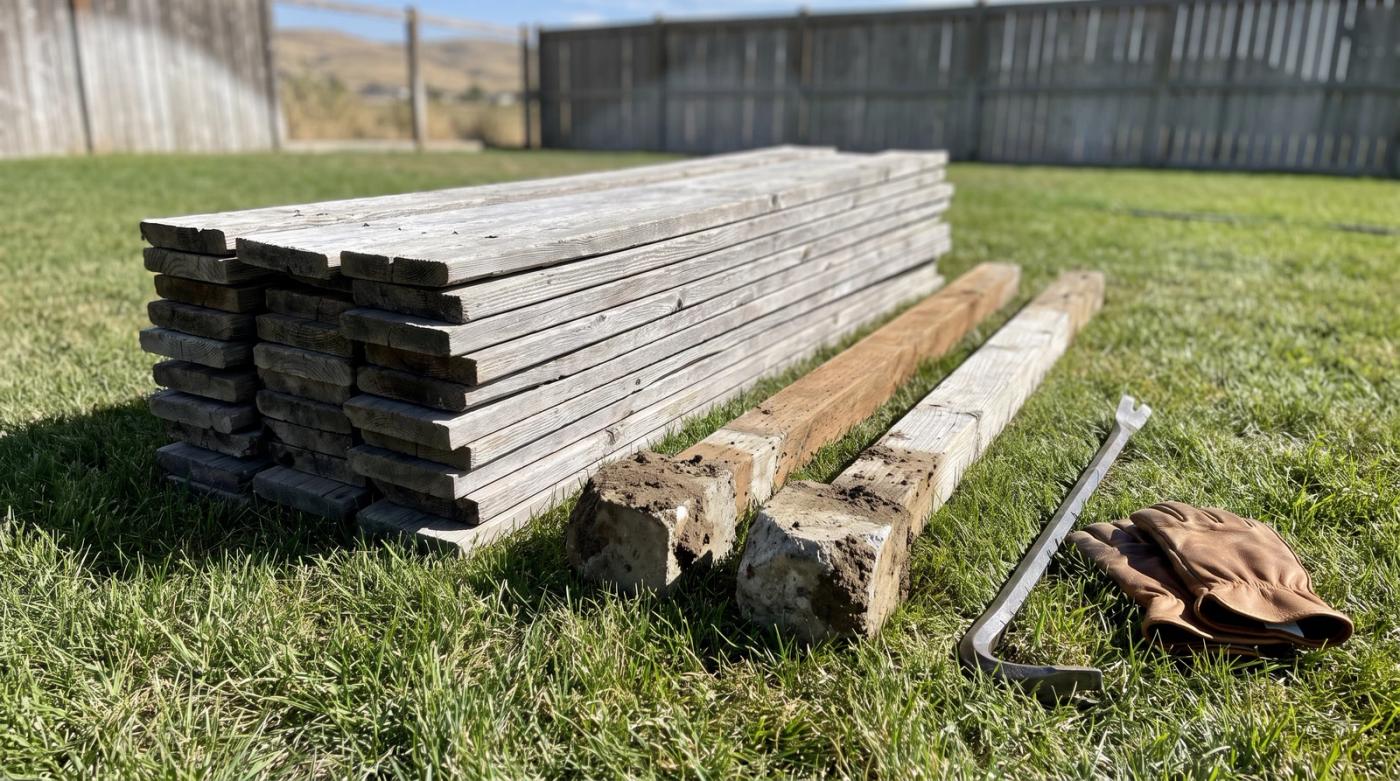
Fence post removal from concrete comes down to three choices: dig the whole concrete footing out, break the concrete up in the hole, or cut the post off and leave the footing in the ground. Which one makes sense depends on how big the footings are, what's going in next, and how much digging you want to do.
The boards come off fast. It's the fence posts that decide whether this is a Saturday project or a job to hand off.
I do light demolition out of Eagle, so I've got a bit of a bias here. But honestly, plenty of fences are a fair DIY project. Some aren't. Here's how to tell which one you've got.
How fence post removal works with concrete footings
The boards are the easy part
Most people picture fence removal as knocking off pickets with a hammer. That part goes fast. How fast depends on the length of the run and how the boards are fastened, but a pry bar and a cordless drill for the screws will handle most of it.
Pull the rails next, and stack the boards with the nails pointing down so nobody steps on one. After that, the real work is post removal, and that depends on what's holding the fence posts in the ground.
Removing fence posts set in concrete
On a lot of newer fences, the posts were set in a big plug of concrete. Pull one and you're not lifting a 4x4. You're lifting a 4x4 with a heavy chunk of concrete hanging off the bottom.
Older fences are a coin flip. Some posts sat in tamped dirt and rotted off right at ground level. Others were set by somebody who really, really didn't want them going anywhere.
Before you start removing fence posts, check a couple of them. Scrape the dirt back at the base. If you hit concrete just under the surface, you've got a cemented fence, so plan on that for the whole line.
Here's how post removal usually goes once you know what's down there:
- Dig a trench around the concrete footing with a narrow spade, close to the bottom of the plug.
- Rock the post back and forth to break the soil's grip.
- Lever it up. A long pry bar under the footing works on small plugs. A post puller, or a farm jack and a chain, handles bigger ones.
- Lift the post and footing out together, or roll it out of the hole if it's too heavy to lift.
- Backfill the post hole and tamp it down so it doesn't settle later.
Is DIY fence demolition worth it?
A short run with posts in plain dirt? Go for it.
The concrete is where it gets rough. With a footed post, you can dig around it and wrestle the whole thing out, or rent a post puller. A farm jack and a chain works too, if you've got one.
The last option is cutting the post off at grade and leaving the concrete in the ground. That's fine if you're putting in lawn. It's a real problem if your new fence posts need to go in the same holes.
Here's a quick look at the usual options:
| Method | Works best when | Watch out for |
|---|---|---|
| Dig and pry | Small footings in soft soil | A sore back on a long run of fence posts |
| Post puller or farm jack | The concrete footing is deep or wide | The chain slipping on a rotted post |
| Break it up in the hole | The concrete is too heavy to lift | Flying chips, so wear eye protection |
| Cut it off at ground level | The new fence goes in new spots | An old footing right where you want to dig later |
Pulling a cemented fence post by hand
Can you do it without special tools? Usually, yes. A cemented fence post comes out by hand if you dig wide enough to get a pry bar or a stout board under the footing, with a block of wood as the pivot.
If the footing won't budge, break it instead. Dig down beside it, then hit the edge of the plug with a sledgehammer until it cracks into pieces you can lift out. Breaking it up in the hole is slow, but it beats fighting a footing that turned out bigger than you thought.
The soil matters too. Dry, hard-packed ground in late summer can bounce a shovel right back at you.
Spring is softer, which makes post removal easier, though it's also muddy and heavy. Winter's mostly out. Frozen ground doesn't give up a post without a fight.
Quick tip: Soaking the dirt around each footing the day before can loosen hard ground and make post extraction a lot less miserable.
Getting rid of the old fence
A long fence makes a surprisingly big pile. Boards, rails, posts, concrete chunks and a whole lot of rusty screws.
You can haul it to the Ada County landfill at Hidden Hollow yourself if you've got a truck and a free morning. Just know that concrete is heavy enough to make a pickup bed sag, and a couple of trips adds up in fuel and fees. Folks out in Nampa and Caldwell deal with the Canyon County landfill instead, same idea.
Old fence wood generally isn't something a thrift store or donation center is going to take. It's weathered, it's full of nails, and a lot of it is pressure-treated.
Which, by the way, you shouldn't burn in the backyard fire pit. The chemicals in treated lumber don't belong in your lungs, or your neighbor's.
Chain-link and metal fencing is a different story. That goes to the scrap recycler, which is where mine ends up.
Heads up: If you plan to dig out post footings, call 811 a few days before you start. It's free, they'll mark the buried lines, and fence lines are exactly where gas, cable and irrigation like to run.
Talk to the neighbor first
This one isn't about tools. If you're removing fence that sits on or near a shared property line, have a quick chat before it comes down.
They may have split the cost of the original fence. They may own a dog that's about to discover a whole new yard. Or they might want to go in on a new one with you.
A short talk over the fence, while it's still standing, saves a lot of awkwardness later.
If you're in an HOA, check their rules on how long a yard can sit unfenced and what the replacement has to look like.
When paying for post removal makes sense
So when should you just call someone?
A long line of cemented fence posts is the big one. A fence running up a slope in the Eagle foothills, where the dirt fights back, is another. And if you don't own a truck, or you'd rather not spend two Saturdays and a chiropractor visit on it, that counts too.
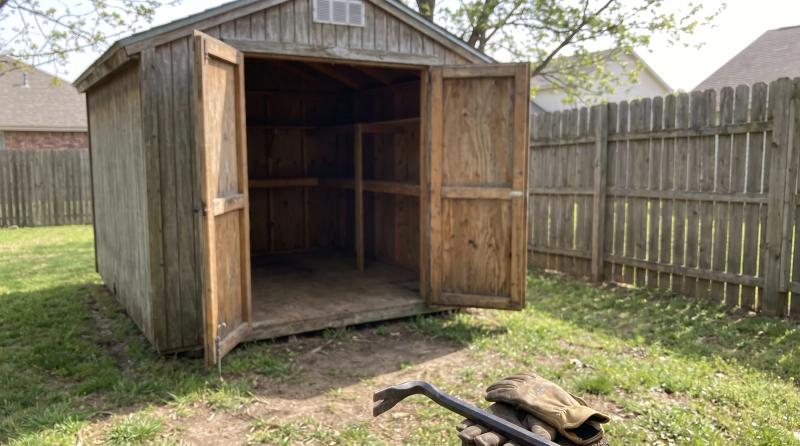
It also makes sense when the fence is part of something bigger. Clearing out a backyard, tearing down an old shed, getting a house ready to sell? Junk removal and light demolition are both part of what I do, and it's easier to have the whole lot hauled in one trip.
Demolition and cleanup on the same visit also keeps your yard from sitting torn up while you wait on a second appointment.
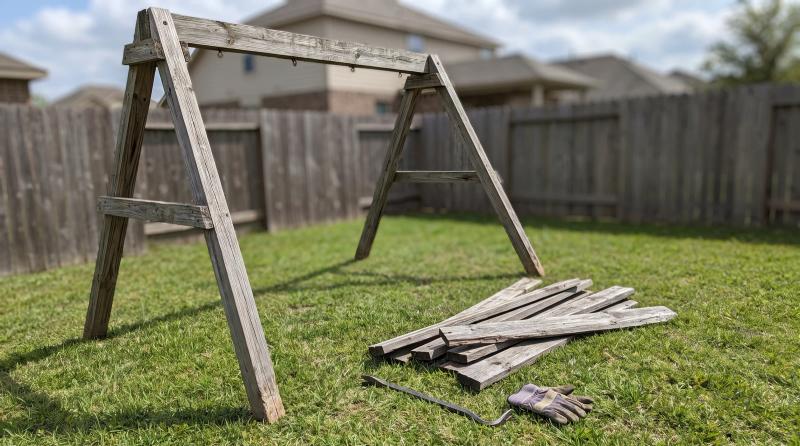
Cost for post removal depends on the length, the material, whether the posts are footed, how big each concrete footing is and how easy it is to get to. A straight run beside a driveway goes a lot quicker than one tucked behind a garden and a swing set.
If it's a short fence with posts in plain dirt, DIY is a fair weekend project. Pull the boards, rock the posts loose, and figure out your haul plan before you start.
If it's a long run with concrete footings, or you just don't want the pile sitting in your yard for a month, that's what I'm here for. Text a photo of the fence to (208) 391-0221 and I'll send you a price.
No pressure either way.
Frequently asked questions
What's the easiest way to get a post out of concrete?
Dig around the footing, rock the post loose, and lever it out with a pry bar or a post puller. If it's too heavy to lift, break the concrete in the hole and take it out in pieces.
Does WD-40 remove concrete?
No. It's a lubricant, and it won't soften cured concrete. Post extraction from a footing still comes down to digging, prying or busting it up.
What will dissolve hardened concrete?
Products sold as concrete dissolvers are made for thin splatter and residue on tools. They won't eat through a solid footing, so the usual way to remove fence post footings is still to dig them out or break them up.
How do you replace a post without removing the concrete?
Related reading: Shed Demolition Prep Before Teardown: Boise Guide to Site Cleanup and How to Remove a Wooden Swing Set in Boise, Step by Step.
Cut the old post off at ground level and set the new one just beside the old footing. To remove fence post stubs from a concrete slab, cut them flush and grind down what's left.
Need help with demolition?
Name and number is all it takes. Man of Steel Junk Removal will get back to you with a price.
Rather just ask?
Skip the reading. Man of Steel Junk Removal picks up the phone.
